
F1 drivers embrace Sepang return as Malaysia steps in after nine-year absence
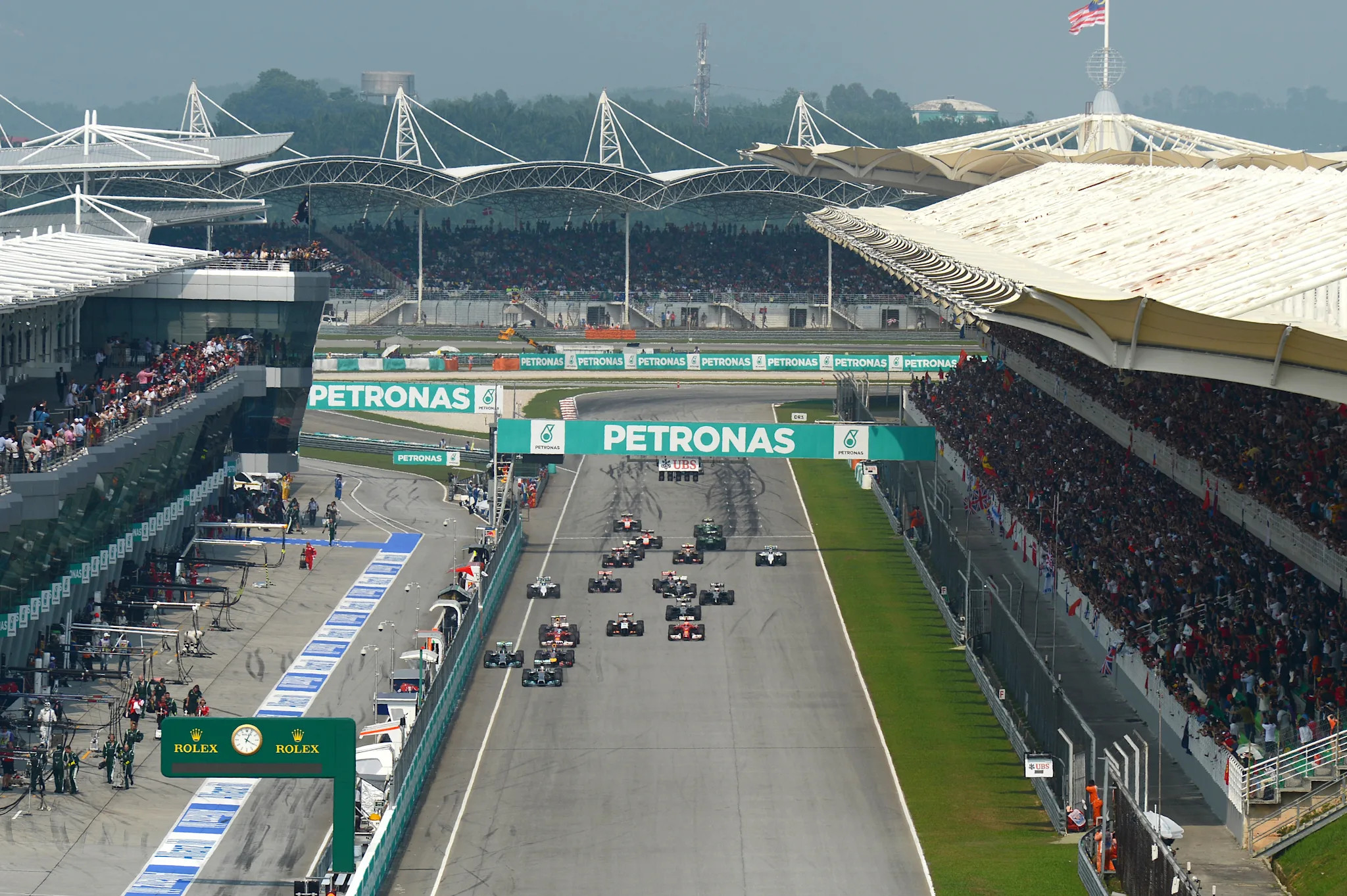 Image accompanying the official F1 announcement.
Formula 1 is scheduled to race at Malaysia’s Sepang International Circuit again after a nine-year absence, as the venue steps in to host the Bahrain Grand Prix. The circuit previously held the Malaysian Grand Prix 19 times from 1999 through the last event there in 2017, becoming one of the first purpose-built “new generation” permanent venues in the sport alongside others that followed worldwide.
Drivers described Sepang as a track that consistently produces engaging racing due to its flowing layout and overtaking opportunities. They also stressed that weather has always been an influential factor at the venue, with the hot and humid conditions creating a physically demanding test while rain has remained a realistic possibility—an element that takes on added relevance in 2026, given that through Round 16 there has not yet been a fully wet session, let alone a wet race.
A large portion of the current grid has personal Sepang experience. Ten drivers have raced there before, including Fernando Alonso (first start in 2001), Lewis Hamilton (2007), Nico Hulkenberg (2010), Sergio Perez (2011), Valtteri Bottas (2013), Carlos Sainz (2015), Max Verstappen (2015), Esteban Ocon (2016), Pierre Gasly (2017) and Lance Stroll (2017).
None, however, have a Sepang résumé as extensive as Alonso, who has won there three times: in 2005 with Renault, in 2007 with McLaren, and in 2012 with Ferrari. The Aston Martin driver said he is eager to race at the circuit again, calling Sepang “a golden ticket,” adding that it is “an incredible circuit, demanding race, temperature, humidity—like Singapore, but in daytime.”
Alonso also framed Sepang as a valuable test for the remaining races of the season, arguing that it is among the nicest tracks left on the schedule and inviting uncertainty around how the competition can adapt under those conditions. His enthusiasm is rooted in the practical reality that he knows the circuit not just from viewing, but from repeated race weekends across different eras of machinery.
Hamilton, who finished second to Alonso in 2007 (during his second-ever F1 start) and later won the race in 2014, also welcomed Sepang’s return. He pointed to Kuala Lumpur as a place he knows well through his long relationship with Mercedes title sponsor Petronas, while describing Sepang as “awesome” and a track that “does give good racing.”
Hamilton emphasized the physical demands created by Sepang’s extreme heat. He argued that Formula 1 is the sport most demanding both mentally and physically, and he specifically compared the intensity to Singapore’s conditions, saying Malaysia “will be crazy this year.” His point was that in this kind of environment, performance depends on pushing close to the edge while having to strain the body further.
Verstappen, the other current-grid past Sepang winner, won the circuit in 2017. While he joked that he was “quite happy” when he won the final Malaysian Grand Prix there, he still described Sepang as a venue he enjoys. Verstappen highlighted the heat as a central challenge and added that tyre degradation is expected to be significant, which could shape strategy decisions over the course of the weekend and into the race.
The Sepang return also carries variety for drivers who have not previously raced there. Lando Norris said he is “excited” for Malaysia, noting that while he has watched many races there from earlier in his career, his experience is also tied to simulator work and training support—he recalled doing sim sessions at “midnight” to 7am while assisting Fernando and Stoffel Vandoorne during their earlier Sepang racing.
For World Championship leader Kimi Antonelli, Sepang represents a first in-person discovery after time on the simulator. He described the circuit as “very fast” with “long corners” and said that putting together a lap is not easy. Antonelli also flagged tyre degradation as a central factor, suggesting that the race could feature “two, three stops,” and pointed to weather as the additional major question mark, with forecasts indicating heavy rain at a specific time of day.
Overall, the return to Sepang sets up a weekend where familiar circuit knowledge, aggressive tyre-management demands and summer-weather uncertainty could all influence how teams navigate the late-season Bahrain Grand Prix scenario—now hosted in Malaysia’s heat at a track drivers consistently describe as both physically punishing and tactically open.
Reporting source: F1 official update