
Qatar Grand Prix tyre strategy: Pirelli’s 27-lap maximum reshapes race plans
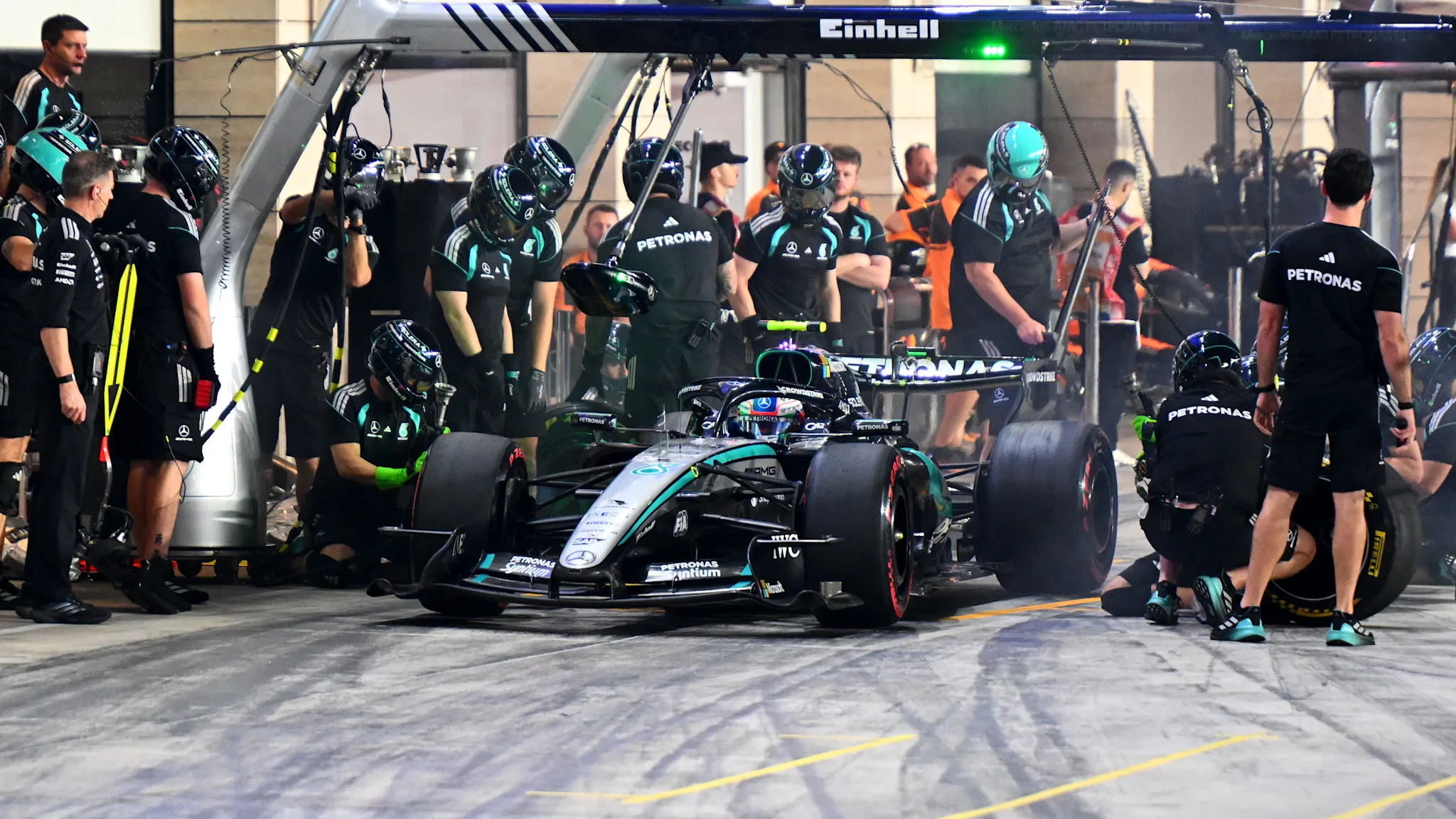 Image accompanying the official F1 announcement.
Mercedes’ pace has stood out across the Qatar Grand Prix weekend, with Kimi Antonelli topping all three practice sessions. Despite that one-lap dominance, it was George Russell who delivered the clean sweep in qualifying, taking pole for the race off his Mercedes teammate by a little over a tenth of a second. McLaren secured the second row, while Red Bull Racing ended up on the third row—setting up a tightly packed start despite the track’s reputation for limited passing opportunities.
While overtaking is expected to be challenging in Qatar, the race is not forecast to be a straightforward procession. The strategy outlook points to high degradation and tyre graining, meaning teams will need to manage tyre performance lap-by-lap rather than rely on an early advantage holding to the finish. In that context, the biggest strategic constraint comes from Pirelli’s attempt to add variability by again applying a maximum tyre mileage.
Pirelli has decreed that tyres can be used for a maximum of 27 laps this weekend. The 27-lap limit is applied across all compounds and includes any laps completed during practice or qualifying. The rule does not count laps-to-grid, formation laps, or laps completed after the chequered flag. For teams, that means the total number of laps a tyre has effectively “spent” over the whole weekend—up to and including qualifying—will directly influence how long a stint can last in the race and where mandatory changes may fall.
With tyres constrained by the 27-lap ceiling and performance expected to degrade quickly, the strategy outlook emphasizes that race planning—when to pit, how to balance tyre life against pace, and how to respond to how the field is forced to sequence their stops—will be the key differentiator. The result is a race shaped less by track position alone and more by how effectively teams can execute under the new mileage framework.
Reporting source: F1 official update