
How the Sphere became a defining feature of the Las Vegas Grand Prix
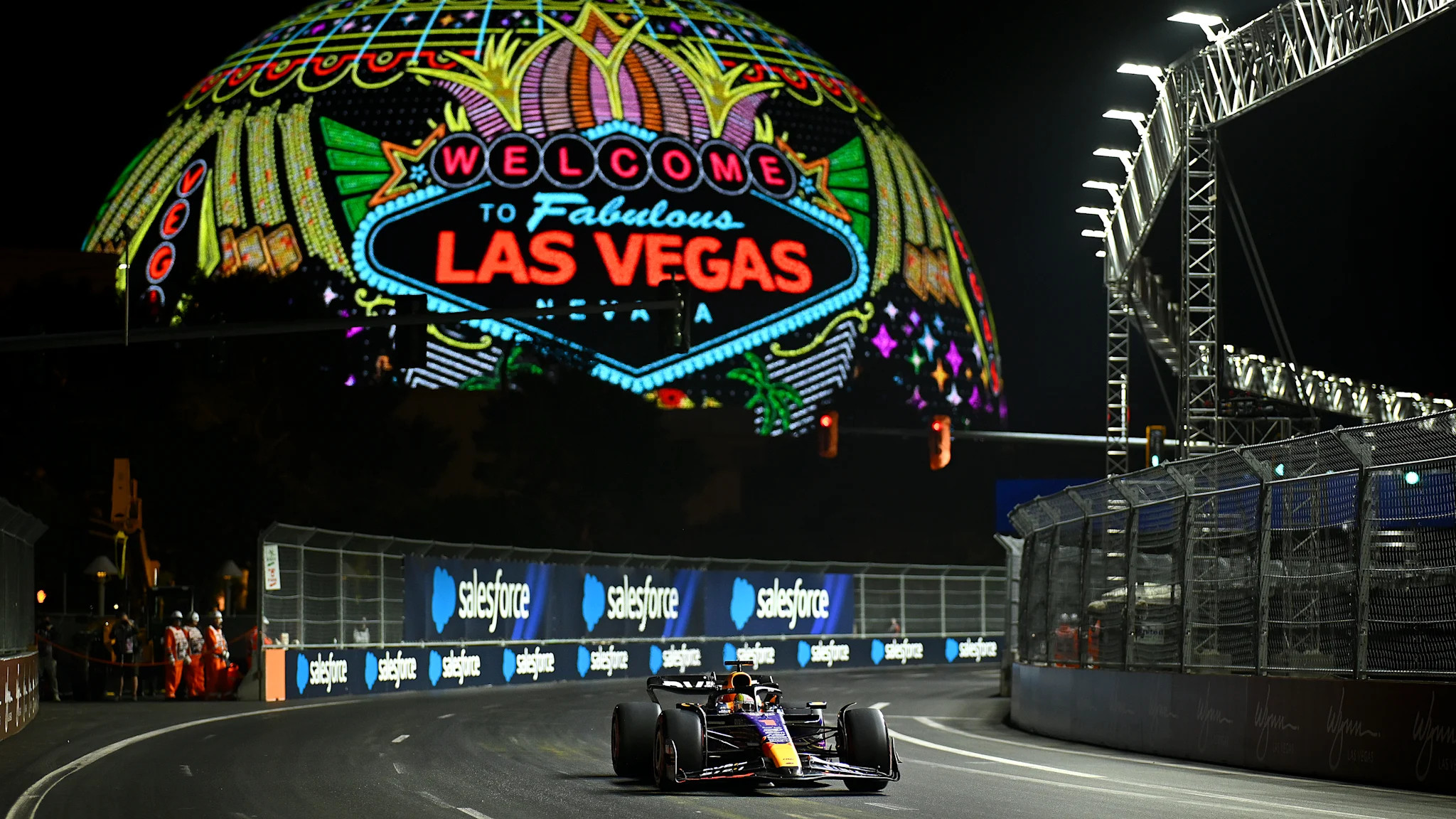 Image accompanying the official F1 announcement.
When Formula 1 returned to Las Vegas in November 2023, the Sphere did more than light up the night skyline. Opened weeks earlier on September 29, 2023, the entertainment venue quickly became part of the race’s identity, offering what Brown calls an “iconic canvas” for a city built on spectacle while also becoming integrated into the way audiences receive real-time information during race weekends.
The scale is part of why the Sphere has stood out so quickly. Its exterior is made up of 54,000 square metres of LED displays and is described as the largest video screen in the world. Inside, the venue can seat up to 20,000 people and features a 16K resolution wraparound interior LED screen, with the Sphere’s design built to envelop viewers in the visuals being displayed.
Formula 1 says the Sphere was positioned alongside the new circuit for the 2023 Las Vegas Grand Prix, helping it feel like a permanent element of the event rather than a temporary distraction. As sessions get underway, the Sphere can display track-status messaging aligned with the FIA’s circuit communications—such as yellow flags, Safety Car information and red-flag indicators when a session stops—pairing the venue’s spectacle with safety and sporting context.
Beyond generic race updates, Formula 1 describes a shift toward more creative programming. The Sphere has shown elements such as “Orbi,” a large yellow emoji face that has been depicted with a racing helmet as it appears to “watch” cars exiting Turn 9. Driver profiles have also been used to educate fans about who the drivers are outside the cockpit and which teams they drive for, turning the Sphere into a bridge between broadcast storytelling and on-site engagement.
That integration has continued to evolve through subsequent events. Formula 1’s account notes that in 2025, onboard footage became a regular feature on the Sphere, with content designed to match the cadence of the 6.201-kilometre track layout and the rhythm of lapping action for viewers at the venue and beyond.
Austin Brown, VP of Marketing at the Las Vegas Grand Prix, describes the collaboration as both technical and creative, emphasizing that content has to be assembled, coordinated and timed to match what the sport is doing in real time. Brown said the Sphere partnership includes “chequered flags, yellow and red flags” as well as podium celebrations, explaining that the F1 broadcast team cueing content in real time works alongside the Sphere team on site throughout the week.
Brown also pointed to data-driven capabilities behind the scenes. According to his comments, the producers can pull some telemetry data from the feed that routes to the Sphere team, enabling the venue to track items such as fastest lap and then post corresponding moments live once race outcomes are known. The approach, Brown said, includes pre-building content for driver- and team-related storylines and then feeding relevant data or aligning live content with track activity for broadcast, social platforms and the in-venue experience.
Formula 1 frames the Sphere as part of a wider Las Vegas entertainment ecosystem, built around continuous shows, celebrity spotting and performances that carry across the race weekend. In Brown’s view, the Sphere is intended to reflect how Liberty Media and Formula 1 have looked to expand the sport’s reach by blending racing with entertainment in a market where that blend is expected to be bigger and more immersive.
Brown, a Las Vegas native, said the neon colours and visual energy of the Sphere fit well with a night race format and highlighted the audience appeal of seeing prominent drivers represented at the venue’s scale, including content options that can animate or show still graphics on the screen. He added that Lewis Hamilton in particular has been used as an example of the kind of “special moment” that can be delivered to fans through the Sphere’s scale, while also noting that the organization has been “excited to see what kind of content is produced” for each year’s event.
Inside the Sphere, the schedule extends beyond race-week programming. Formula 1 says the venue hosts immersive shows such as The Wizard of Oz with 4D effects and notes that, after this year’s Las Vegas Grand Prix, the Backstreet Boys will perform the Official Afterparty at Sphere. It also states that other residency acts have included Metallica and No Doubt, with further artists scheduled throughout 2027, including John Mayer and P!nk, and that the venue’s large interior can accommodate an impressive range of production scale.
In the picture Formula 1 paints, what started as an attention-grabbing landmark tied to F1’s return has become embedded in how the race experience is delivered—melding FIA-aligned race messaging with driver storytelling, data-backed moments and entertainment programming. Brown’s conclusion underlines the strategic goal of turning “everything” Las Vegas offers—entertainment, food, beverage and hospitality—into a cohesive experience that carries from the city’s most iconic venue back onto the circuit.
Based on Formula 1’s account, the Sphere’s role is no longer limited to backdrop visibility. Instead, it functions as a real-time display system and audience stage that helps bring on-track events to life at a scale that Formula 1 describes as unmatched on its calendar.
Reporting source: F1 official update