
Drivers expect tyre-degradation and possible wet running to define Sepang’s return to F1 after 2017
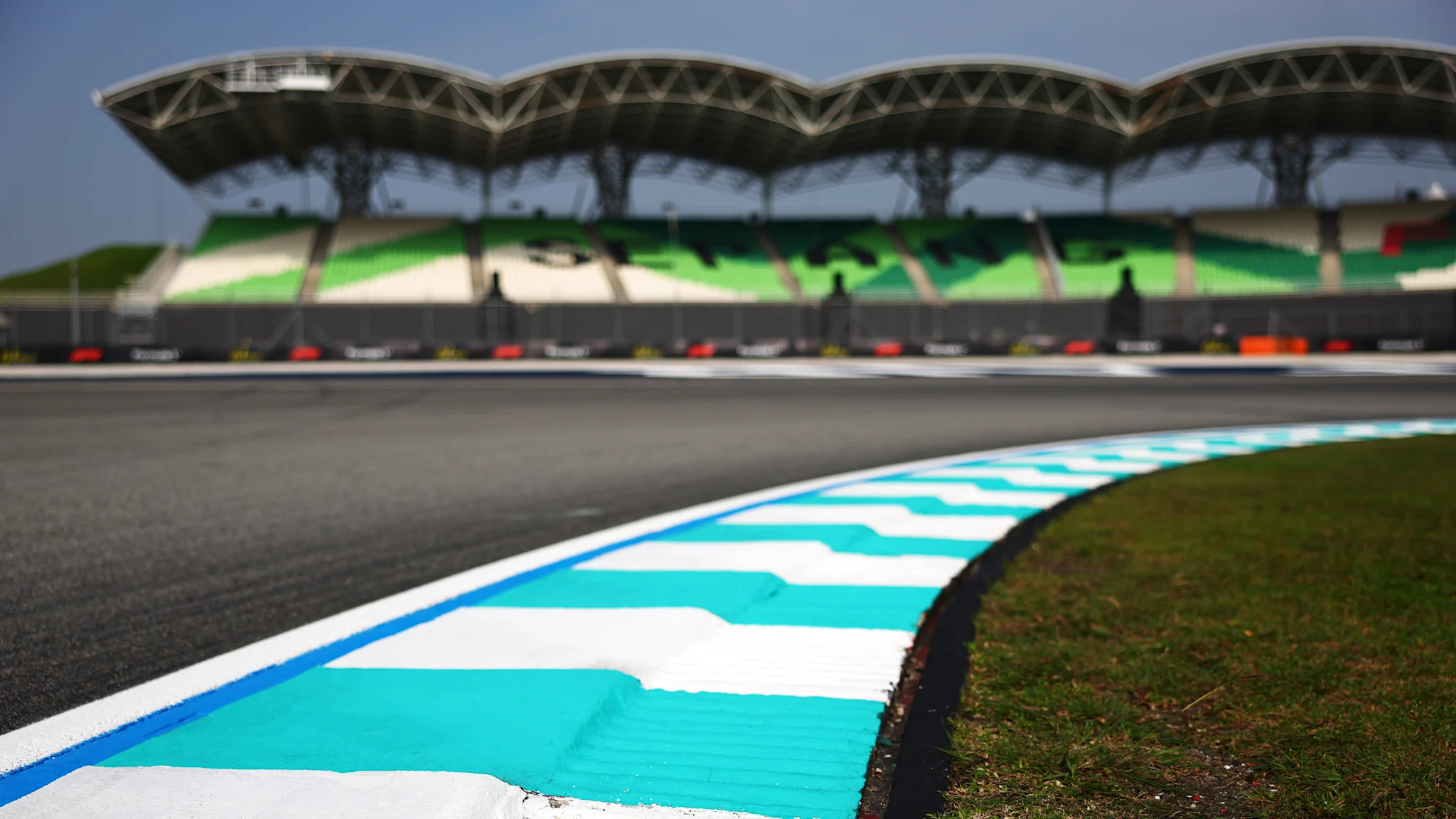 Image accompanying the official F1 announcement.
Sepang International Circuit is preparing to host an F1 race for the first time since 2017, and the drivers who visited the track on Thursday described a weekend likely to be shaped by how quickly the 2026 tyres lose performance. For around half the grid, it was a first chance to view the circuit properly beyond TV coverage or factory simulators, while the rest had the reference point of their last experience there nine years ago.
Even for the most familiar drivers, the consensus was that Sepang’s surface is demanding on tyres. The drivers said the track has long been known for roughness that accelerates tyre wear, and that the abrasiveness has increased over time. As a result, managing tyre degradation is expected to be the defining theme for both qualifying and the race, with two or three pit stops looking likely—an outcome teams and drivers believe can also create more strategic variety.
Carlos Sainz suggested the timing of Sepang’s appearance could bring a welcome change in race character. After recent weekends with little or no degradation, the Ferrari driver said he would “maybe finally” like to see tyre degradation again, arguing it can make racing less dependent on raw driver intensity alone and more dependent on setup and how the car is driven relative to the tyre.
Oscar Piastri also anticipated significant wear at Sepang. When asked about degradation, he said the circuit “looks like sandpaper,” adding that he expects it to be “challenging” and that the whole weekend could feel difficult “from every angle,” including how the track’s characteristics interact with available running.
For Kimi Antonelli, the challenge is partly about how the circuit’s behaviour differs from what the series has recently faced. He said Sepang will be “completely different” compared with the three races after the summer break, which he described as running on new tarmac with “no deg.” Antonelli contrasted Sepang with his recollection of Baku—where he said pushing harder benefited tyres—stressing that Sepang will require a different approach because the tyres are unlikely to stay happy over both long runs and shorter, high-grip stints.
Antonelli also linked Sepang’s surface to qualifying demands, suggesting it will be important to extract maximum grip during a single lap. He said tyres could be “screaming quite a lot” later in a stint, especially into Sector 3, and he warned that practice and qualifying runs may come with limited lap counts when teams attempt preparation for race simulation. He added that the event is likely to produce a scenario with two or three stops due to the combination of rough tarmac and expected heat, while emphasising “very different driving” and “very different approach” compared with recent races.
Beyond the sheer wear rate, George Russell offered a second dimension to the tyre challenge: overheating that could complicate close racing. He said Sepang differs from other “yo-yo” circuits because surface overheating is expected to be significant. Russell pointed to examples such as Melbourne, Silverstone and Monza—where he said the surface did not create as much overheating—and Canada, suggesting those conditions allowed drivers to remain within roughly one second. In his view, Sepang’s overheating could make it harder to follow closely after an overtake and to re-attack.
Russell framed the issue as an area with “a total unknown” component for the weekend, because it will depend on how the tyres behave in real session conditions. He nevertheless highlighted that overheating could begin even on an out lap during qualifying, potentially affecting how confidently drivers can push and regain performance after being stuck in traffic.
Rain is another major storyline for Sepang. The drivers said there has been no properly wet official session in the World Championship so far, despite Sepang being Round 16, and they noted that many teams have little or no real experience with the 2026 cars in wet conditions. Lando Norris said he has “not driven in the wet in this car,” describing wet running as a “new experience” that teams must be ready for.
The drivers also tied wet concerns to both tyre choice and power delivery. Sainz said wet weather would test more than tyres, pointing to downshift issues and harvesting, as well as power variability corner to corner in changing conditions. He described the wet as “for sure a good test” and highlighted that the wet and intermediate tyres for this season have been described by those who have run them as difficult.
Antonelli, meanwhile, said rain would be an opportunity rather than a threat, even with the championship in mind. He welcomed the chance to complete laps in wet conditions, citing how often the field has avoided rain this year. He argued that doing running in the wet—potentially even during practice—would help reduce the limited knowledge many drivers currently have about how the cars, tyres and power unit behave in wet conditions.
Finally, Antonelli suggested Sepang’s asphalt could be advantageous if rain arrives. He said the water drains away because of the track’s openness and that there is typically not much standing water unless rainfall is heavy. He added that, in his view, this surface openness could reduce the risk of aquaplaning, describing the water as going “in-between the stones,” which he believes could make Sepang a suitable venue to try the cars in the rain for the first time.
Reporting source: F1 official update