
Toto Wolff explains Mercedes’ split-spec approach in Singapore as upgraded W17 proves harder to drive
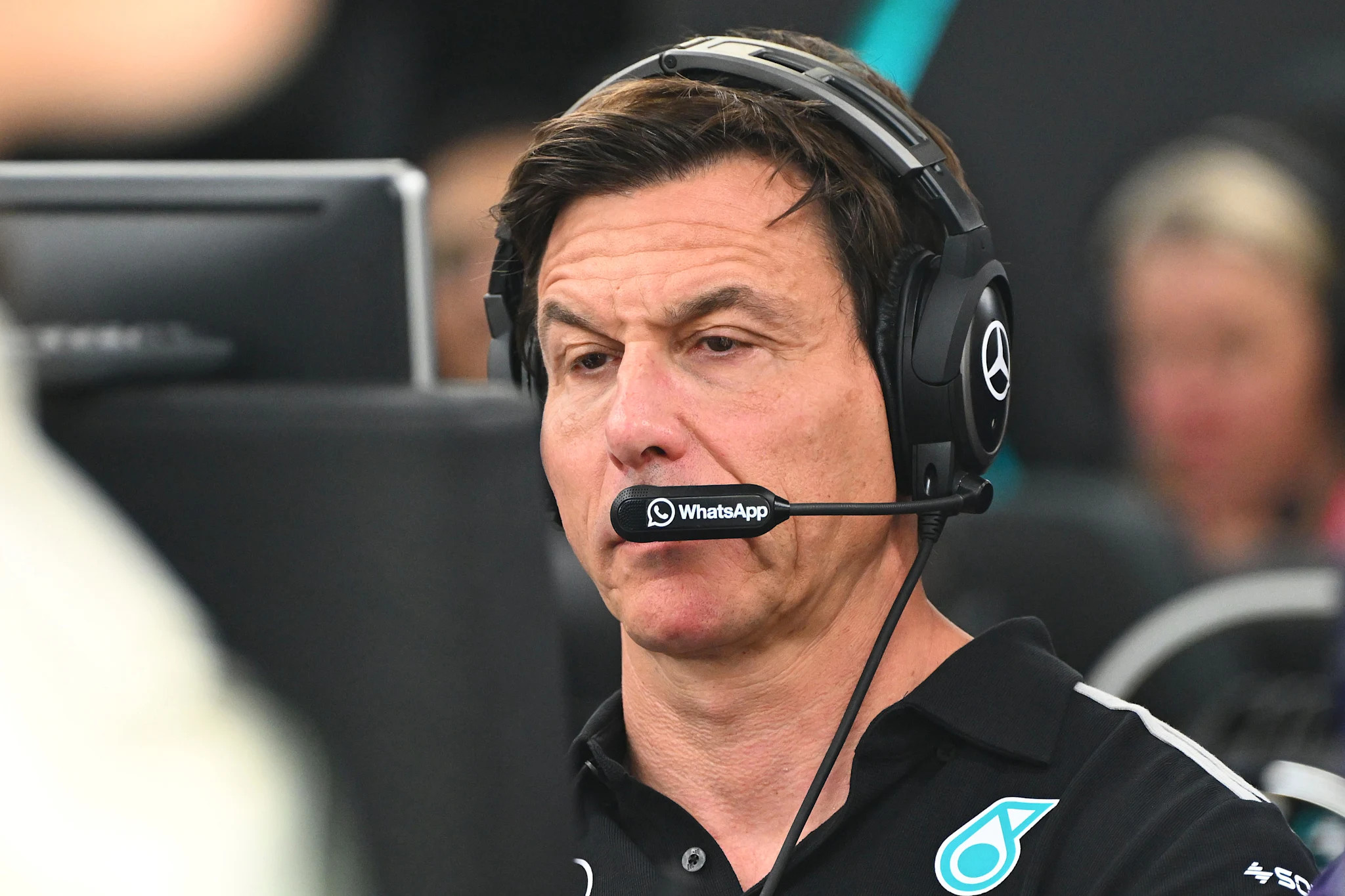 Image accompanying the official F1 announcement.
Mercedes team principal Toto Wolff said his team’s choice to split car specifications between Kimi Antonelli and George Russell in Singapore is designed to better understand performance from an upgraded W17 package that appears “a little more tricky to drive.” Wolff framed the approach as a necessary “compromise” to isolate what is working and what is not between the older and newer configurations on Marina Bay’s street circuit, which he described as an outlier on the calendar.
Wolff said Mercedes held off on regular tweaks and instead introduced its first major update in four months at the Bahrain Grand Prix in Malaysia. He said the upgrade did not deliver the boost the team expected, prompting a plan to run Russell on the specification Mercedes last used in Azerbaijan—where he dominated qualifying and won the Grand Prix—so that the team could make a direct comparison against his teammate running the upgraded car.
In the Singapore set-up described by Wolff, Russell reverted to the Azerbaijan-spec W17 while Antonelli remained on the upgraded specification and also tested a new front wing. Wolff said the early session picture has not yet matched what the team hoped to see from the upgraded direction: Antonelli finished behind Russell in both FP1 and Sprint Qualifying, reinforcing the need for deeper analysis rather than a quick conclusion on outright speed.
Wolff acknowledged that running two different cars is not ideal, but said Mercedes’ current situation requires time and evidence. He said the team needs to “dissect what’s working and what’s not” across both the “old and the new spec,” then determine how development should proceed in order to extract optimum lap time. He also tied the split-spec programme to next-year planning, describing it as part of ensuring the team makes the right choices for 2027.
The Mercedes team principal linked the diagnostic effort directly to how the upgraded car is behaving. He said the new W17 “seems to be a little more tricky to drive,” without asserting it is necessarily slower. In contrast, he characterized the older car as “a bit more stable” and “grippy,” while noting that the current comparison is only “one data point” and will need more time to generate conclusive information.
Wolff said Mercedes has committed “a few months of upgrades” that point in a direction the team believes is advantageous, but that the car may simply need additional calibration to find the right way forward. Looking further ahead, he suggested the team may need a different approach to development pacing and packaging if the current risk does not pay off. He said Mercedes is a large organisation that must be careful with cost cap spending, adding that it had chosen to work toward a bigger upgrade and introduce it, even though the downside is that it can be harder to understand what went wrong if expectations are not met.
In assessing risk, Wolff noted that if a large step does not work as planned, it becomes “quite difficult to dial yourself out” and identify why performance did not improve. He said Mercedes will review the strategy going forward and suggested smaller steps could be easier to reverse if a “warning light” appears, since the team would have an easier path to undo changes.
Despite the upgrade questions, Wolff said Mercedes still believes the work could be relevant as the season progresses. He pointed to the broader championship context: Mercedes dominated the early rounds of 2026 and built a 151-point advantage over Ferrari in the Teams’ Championship, but rivals including Ferrari, McLaren and Red Bull have since claimed race wins and narrowed the gap.
Russell and Antonelli offered their own early reads on Mercedes’ strategy. Russell said the older configuration is “not bad” and urged patience on the upgrade, stating that the team has “nothing telling us that it isn’t working” while noting that the stopwatch results have not been favourable so far. Antonelli said he expects a “difficult weekend” unless Mercedes can find something in the car, adding that he does not currently see enough to find a large gap to the leading pace, while also saying he will try to improve his driving with the engineers ahead of the next session.
The split-spec plan in Singapore therefore positions Mercedes’ remaining work as both a short-term performance challenge and a longer-term development exercise: using Russell’s reverted car to benchmark the Azerbaijan-spec baseline, while using Antonelli’s upgraded configuration and front-wing testing to determine how to tune and calibrate the W17’s direction for 2027.
F1’s Singapore weekend continues as Wolff’s analysis suggests Mercedes is still working through how to translate its upgrade direction into consistent track performance at Marina Bay.
Reporting source: F1 official update