
Christin Freitag on building Schumacher ’94: The Birth of a Legend with archives, music and Imola’s emotional weight
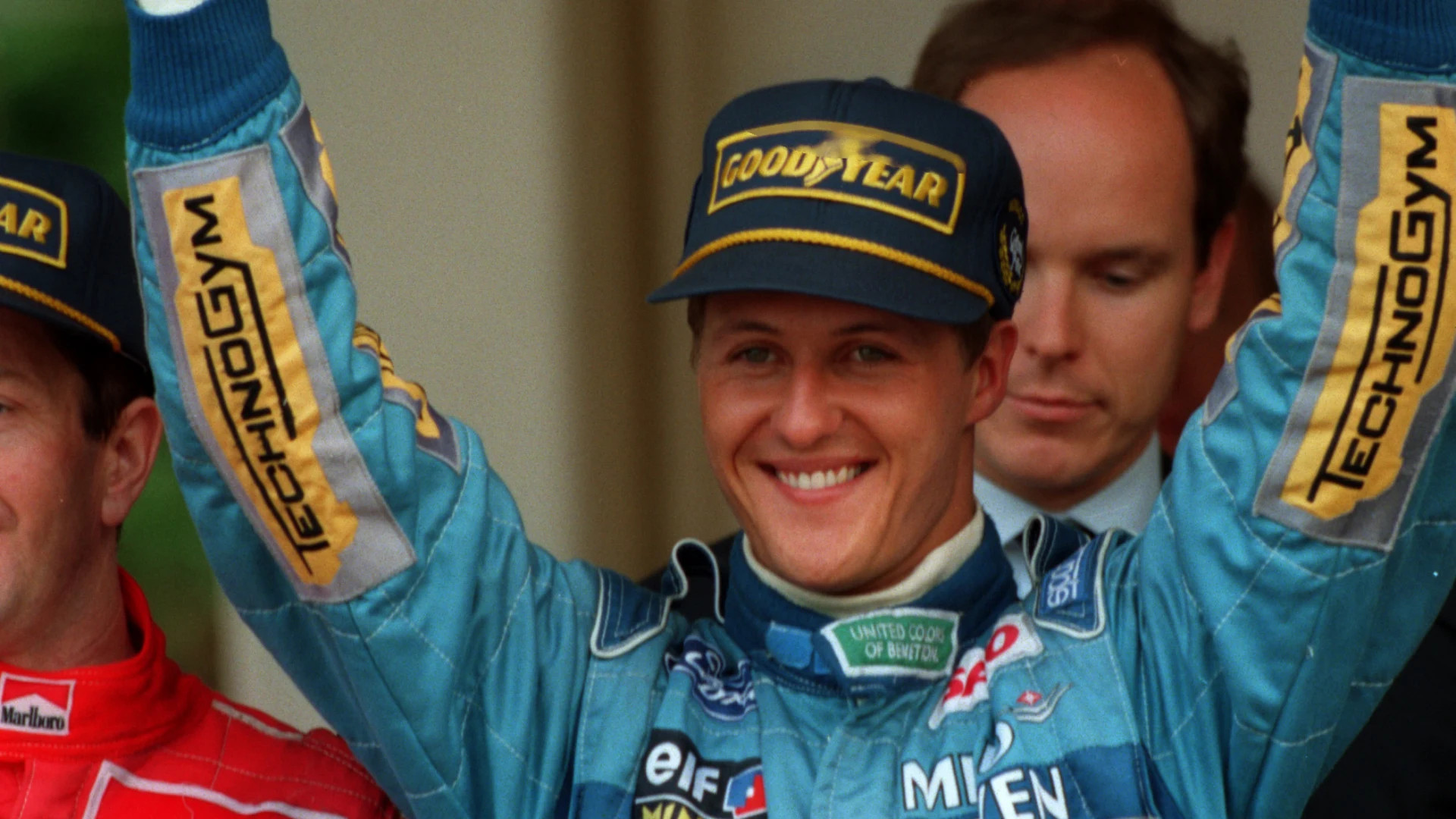 Image accompanying the official F1 announcement.
Netflix documentary director Christin Freitag said her team set out to do more than recount Michael Schumacher’s first championship-winning season: they aimed to immerse viewers in the 1994 Formula 1 world by blending extensive archival material with a soundtrack and interviews structured to feel like a real-time experience. Speaking in conversation with F1.com, Freitag described Schumacher ’94: The Birth of a Legend as a narrative build designed to bring “the time” back into focus, rather than looking at it from a distance.
Freitag said she and editor Bobby Good scanned “everything,” drawing from an estimated 1,300 hours of race-related footage. In her description, the challenge was that much of the visual record can start to look similar—helmets, suits and track shots—so the editorial work focused on identifying moments on faces, and on Schumacher in particular, that felt “interesting or real.” She also explained that the film’s interviews were planned so contributors would recount events in the present tense, which would sit alongside the archival sequences and maintain the documentary’s forward-driving momentum.
The documentary, released on Netflix on October 2, follows Schumacher—then 25 years old—across the season from his opening victory in Brazil through to the title decider in Adelaide. Freitag said the film’s core requirement was that archive footage be central to the experience: she estimated that roughly 60 to 70 per cent of the documentary should be archival material to make it immersive. She also described the production process in terms of construction, saying she effectively wrote a script that determined scene order and which “protagonists” were needed for each segment.
Music is presented by Freitag as a key immersion tool, used not just as decoration but also as an editing framework. She said the soundtrack combines original scoring with songs from the decade, including Pulp’s “Common People” and Paula Abdul’s “Rush Rush.” Freitag noted that “Rush Rush” carries particular significance for Schumacher and his wife Corinna, and she explained that the team used period tracks to create an authentic tone while still using precise scoring to ensure the film felt modernised without losing the 1990s feel.
Freitag said the inclusion of “Common People,” released in 1995, came more from instinct than a meticulously engineered narrative choice, describing it as a gut reaction based on a larger collection of 1990s music. She characterized the curation process as both an emotional and practical undertaking—finding songs that could “live” in the film with space for the story, while also composing and syncing music for scenes where rhythm and mood required original scoring.
A major focus of the documentary is the emotional pressure of the 1994 San Marino Grand Prix at Imola, which Freitag called one of the darkest weekends in Formula 1 history. She referenced the sequence of events beginning with Rubens Barrichello’s serious crash during Friday qualifying, followed by the deaths of Roland Ratzenberger during Saturday qualifying and Ayrton Senna during Sunday’s race. Freitag said she wanted to recreate the weekend as people back then experienced it, describing the film’s approach as starting with relative lightness and excitement before depicting how tragedy unfolded “out of nowhere” and then repeatedly escalated.
Freitag said editing down the Imola material still required difficult decisions because the footage is emotionally relentless and difficult to stop watching. She described a goal of recreating the sensation of being embedded in the weekend—unable to believe it is happening and watching it worsen—framing the documentary as an attempt to relive that trauma while guiding viewers through the timeline.
Schumacher’s relationship to Ayrton Senna also appears later in the documentary. Freitag said she wanted Senna to remain present because she felt Senna was always “at the back of his mind,” and she linked that idea to Schumacher’s emotional moment at Monza in 2000, when he spoke about equalling Senna’s record of 41 Grand Prix victories. In Freitag’s account, the film’s inclusion of Senna-related material is intended to show continuity in how Schumacher carried that legacy for years.
Freitag said she discovered a different version of Schumacher during research and access to archival material, particularly in an English-language interview where Schumacher discussed fears after Imola. She explained that when interviewing other people, she was searching for a perceived trait of fearlessness, but archival material suggested a more protective and sensitive side. She added that Willi Weber—Schumacher’s manager during his rise—supported that shift, saying Weber recalled Schumacher changing after Imola.
Corinna also features as a central perspective in the documentary. Freitag described her as light-hearted and said she wanted to capture a side of her that, in Freitag’s view, had not appeared in earlier interviews. She also noted that Schumacher and Corinna entered Formula 1’s public world as a couple. In addition, Freitag said the documentary includes moments Schumacher experienced internally that Corinna was not aware of at the time, including archival comments about struggling to sleep following Senna’s death and fearing for his life even away from the circuit.
Beyond the central figures, Freitag said the film aims to balance recognizable names with behind-the-scenes voices and broader context. She cited contributions including Flavio Briatore, Schumacher’s Benetton Team Principal; David Coulthard, who made his F1 debut with Williams at the Spanish Grand Prix following Senna’s death; and Bernie Ecclestone, along with German television personalities Kai Ebel and Heiko Wasser. Freitag said her selection process involved narrowing from a storytelling perspective—identifying who was crucial to specific moments—and considering who would provide proximity to Schumacher as the main character.
Finally, Freitag described the documentary’s treatment of television and fan culture as part of building Schumimania, highlighting RTL’s role in helping F1 reach a wider German audience and archival material from Hockenheim showing fans gathering near the circuit. She called the Hockenheim scene a “love letter” to a German soul she felt had disappeared, and said she specifically tracked down footage from the camping area that she described as a gift. Freitag also connected Schumacher’s popularity to a cultural perception that he was “one of us,” referencing a point attributed to Weber.
The documentary’s narrative reaches its climax at Adelaide, where Schumacher and Damon Hill arrived separated by one point. Freitag said their collision ended both races, enabling Schumacher to claim his first World Championship, which she described as the starting point of the legend—while emphasizing that the film itself is fundamentally “before the legend,” focused on the road that leads to it.
Reporting source: F1 official update