
Toto Wolff says Mercedes was surprised by slipstream effect during Las Vegas qualifying after Antonelli tops timesheets
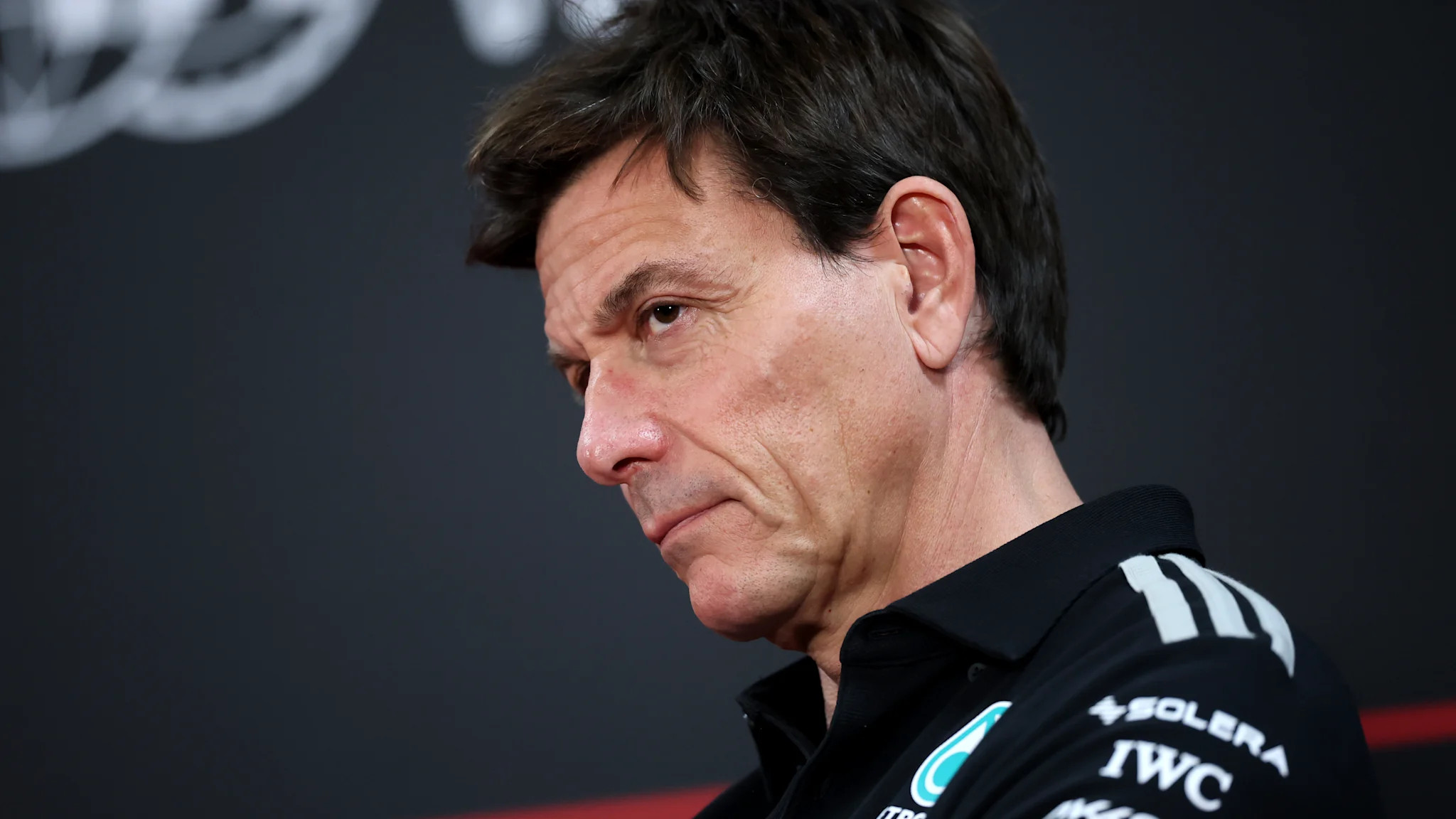 Image accompanying the official F1 announcement.
Mercedes Team Principal Toto Wolff said his team was caught off guard by how strongly the slipstream and tow effect appeared to influence lap times during Qualifying for the Las Vegas Grand Prix. Wolff described a session in which drivers seemed to benefit from being closely positioned along the circuit’s long straights, rather than losing too much time in the corners to offset the advantage on faster sections.
Wolff pointed out that his decades in motorsport left him with a different expectation: that when cars run within roughly a car-and-a-half’s distance, the time gained on the straight is usually outweighed by the penalty through corners. “I’ve had 35 years in motorsport,” he said, adding that he had “never seen tows working when you're one and a half seconds behind each other like a train.” He said Mercedes learned about the slipstream’s effectiveness later than some of the other teams. “We found out later than some of the other teams, and I have no idea how these lap times came together,” Wolff added.
Despite the late discovery, Mercedes had a standout qualifying. Kimi Antonelli set the fastest time to top the timesheets, ahead of Max Verstappen and George Russell. However, Antonelli received a five-place grid penalty for power unit changes, meaning he will start sixth rather than on the front row. The penalty also promoted Russell into the front-row starting position alongside Verstappen.
Wolff said Antonelli’s final qualifying decision was also a key part of how the session unfolded. He explained that Antonelli chose to drop to the back of the tow queue ahead of his last flying lap, a move that initially made Mercedes concerned the Italian might not be able to start the lap with enough time remaining. “We thought he wouldn't cross the line in time,” Wolff said, clarifying that even if he had crossed, the proximity to the car ahead would have compromised the lap. He then said the lap ultimately delivered pace “for whatever miracle reason,” but that the team’s earlier concern had effectively left that earlier lap opportunity behind.
Looking at what comes next, Wolff said he expected Russell to be in contention for pole before the final runs, noting the Briton’s position during the session. “George, for me, had the perfect position. He was four seconds behind the car in front,” Wolff said. He stressed that Mercedes still needed to understand where Russell lost time, pointing specifically to “Turns 7, 8 and 9,” and whether any incident or mistake occurred there, while also indicating Russell’s pace suggested it was an ideal setup for a pole lap. Wolff concluded with a warning to watch the early running from the front row, saying it would be “big cinema” if they attempt to go side-by-side through the first corners together.
Antonelli’s grid-drop and Russell’s promotion underscore how qualifying in Las Vegas can hinge on tow timing as well as outright pace, with Wolff’s comments highlighting that Mercedes now has fresh data to evaluate how slipstream windows formed during the session. With Russell and Verstappen sharing the front row, the team will be watching closely for how the first-corner dynamics play out after qualifying’s tow-influenced outcome.
Reporting source: F1 official update