
Oscar Piastri credits adapting to McLaren’s MCL40 as the key to his tough 2026 learning curve
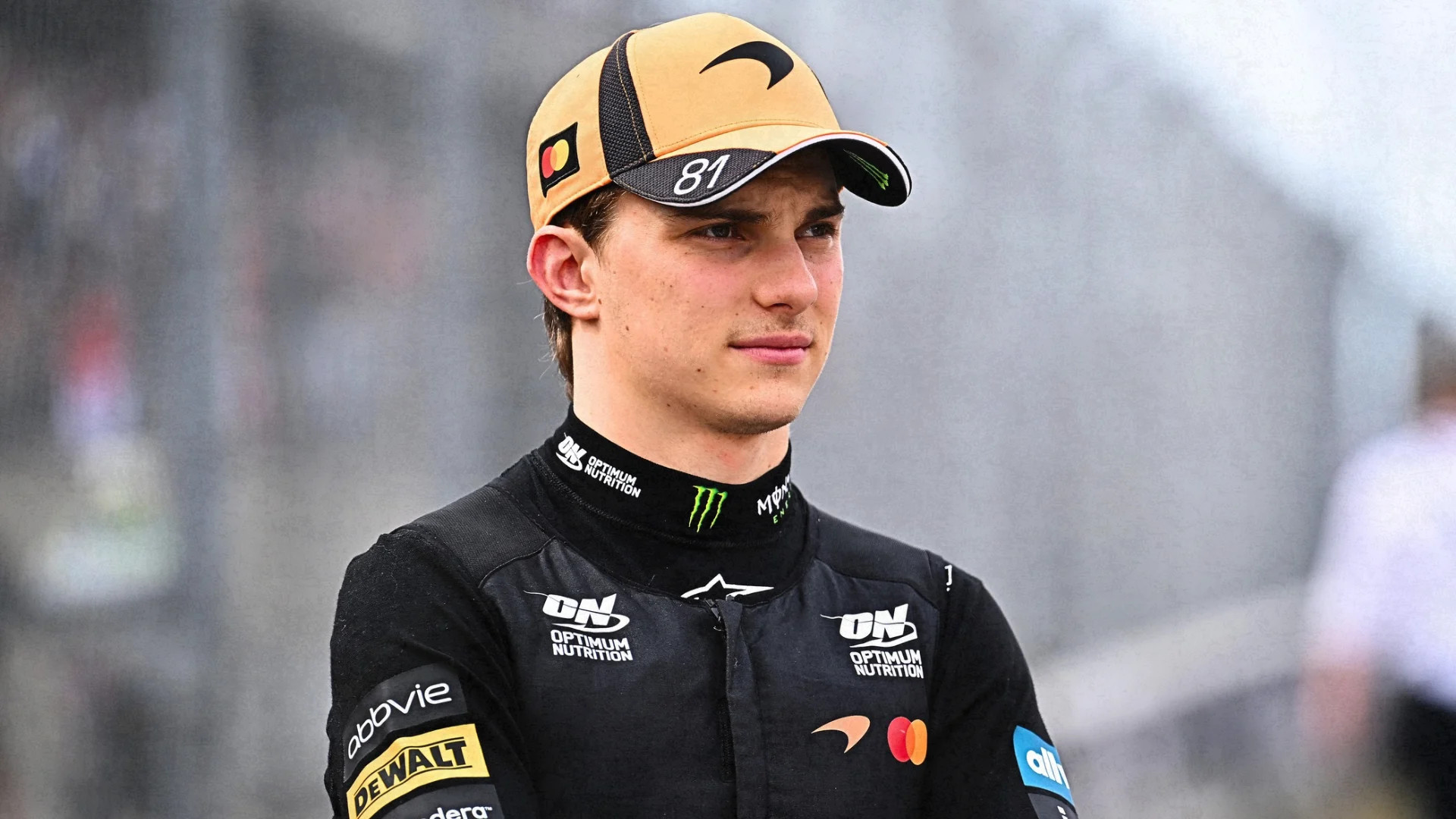 Image accompanying the official F1 announcement.
Oscar Piastri has described 2026 as a difficult year of adjustment, citing both early race setbacks and a deeper technical challenge in learning to drive McLaren’s MCL40. By his account, the season began with a DNS in Australia in front of his home crowd, followed quickly by another DNS in China, before the more prolonged problem of matching his natural approach to the demands of the car began to dominate his week-to-week preparation. He said he is now “making progress” in the second half of the year, after a challenging opening period.
Piastri enters the United States Grand Prix period sitting seventh in the Drivers’ Championship, one place behind his teammate, and 94 points away from Lando Norris, who is ahead in the standings. According to Piastri’s year-to-date comparison, Norris has three race wins, with the most recent coming last weekend in Sao Paulo, while Piastri has been on the podium twice—both in rounds three and four. The gap to Norris is especially stark against 2025, when Piastri was involved in a three-way fight for the title that concluded on the final race day, with Norris winning the championship and Max Verstappen taking second.
Much of Piastri’s explanation focused on why the MCL40 has been harder to integrate than he expected at first. He said the task was not simply about general learning, but about retraining the instincts he had relied on over previous seasons. McLaren team principal Andrea Stella has also pointed to a specific limitation: Piastri has not been able to drive “through pure instinct” in certain conditions. In his own words, Piastri said the challenge has been “tougher than I expected,” as he tried to get to grips with the car while still navigating the wider demands of a season shaped by technical change.
Piastri also connected his struggles to the broader technical reset that arrived with the new rules for 2026, especially the added workload in learning the power unit and related system behaviour. He said that, as the year has progressed, he has felt forced to “change a lot of things” in how he drives, including tweaking his technique to suit the car’s characteristics. He emphasized that improvement has come particularly in the second half, and that the next step is to keep pushing the direction of travel rather than treat the progress as finished.
When asked why his adaptation has been so significant, Piastri pointed to a difference in the overall driving style required by the current generation. He said the “biggest thing” is the general driving style needed for this year’s car compared with earlier seasons, adding that while adaptation has always been part of Formula 1, 2026 has involved “a combination of a few different things.” In his description, the cars are smaller and tyres are different, which means he has to drive “on the edge” more consistently. However, he suggested the edge is not merely where the car performs best—it is a zone where the driver can be pushed “beyond the edge” as he tries to salvage performance when conditions aren’t immediately favourable.
Piastri said that this has made his process of finding and trusting the limit more complex than he is used to. Retraining what feels like the limit “is never an easy thing,” he said, but he believes he is moving in the right direction. The key consequence of that shift is that extracting the car’s potential demands sustained, deliberate inputs rather than relying on the kind of immediate, instinctive feel that he has been praised for in the past.
McLaren leadership has also publicly acknowledged Piastri’s improvement during the season. Over the Singapore Grand Prix weekend, McLaren CEO Zak Brown said Piastri was “feeling more confident and on top of things,” and that Brown “like[s] where both our drivers are now.” Piastri, while acknowledging he would have preferred the season to resemble the 2025 title fight, said he believes the technical adversity could ultimately prove beneficial as he develops the skills required to adapt to future cars.
Looking at the longer arc, Piastri argued that some of the challenges have not been entirely new. He said that even issues from last year were “not completely dissimilar” to what he has faced this year, and that he has made progress in overcoming them. He also stressed that the remaining races will provide another assessment of how far he has advanced in adapting his driving and developing the skills required for continued improvement.
Despite the competitive gap that has opened in 2026, Piastri said the atmosphere at McLaren remains focused. He described the sense that “everyone is still very determined” to return to the front, and he acknowledged that the competition—particularly Mercedes—will raise the bar through both competitiveness and ongoing development. Still, he argued that McLaren has “set the bar pretty high” in its recent championship years and suggested the team is ready to push again, with development and upgrades historically a strength for them.
Piastri also reflected on how adversity can strengthen working relationships inside a team. He said he and the close, “pretty close and intimate” engineering group around him have learned more about each other and about how to maximize their efforts, calling it a “good process” that has helped him refine his collaboration and feedback loop. In a season where performance has not always matched expectations, he said that the practical path to satisfaction has been progress, not perfect results.
Asked what has brought him joy during a year shaped by technical and competitive difficulty, Piastri said he tries to separate results from what success looks like, adding that improvement can be the right measure when winning is out of reach due to the car and the challenges he has faced. He said he has had “some very strong weekends” in 2026 that made him happy, and that his focus remains on working through the remaining limitations.
Finally, Piastri addressed the psychological challenge that can come when identity and self-worth become tied to performance. He said it is difficult because drivers spend so much time around racing and related work, but he added that he is able to switch off by keeping life outside the track familiar. He referenced spending time with his girlfriend, decompressing with television, and using his simulator and video games—suggesting that his routine has not changed even when racing results have.
As he looks ahead, Piastri said he hopes McLaren will soon return to fighting for championships, and he described 2026 as a season where the top four teams have all had “strong moments,” reinforcing how quickly form can ebb and flow. He believes that, even as rivals have raised their standards, he and his team can raise theirs again—an outlook that, in his view, is central to turning a difficult 2026 into a stronger foundation for the future.
Reporting source: F1 official update