
Rwanda signs 10-year deal to host an African Grand Prix in the early 2030s, with Bugesera circuit plans led by Tilke and Alex Wurz
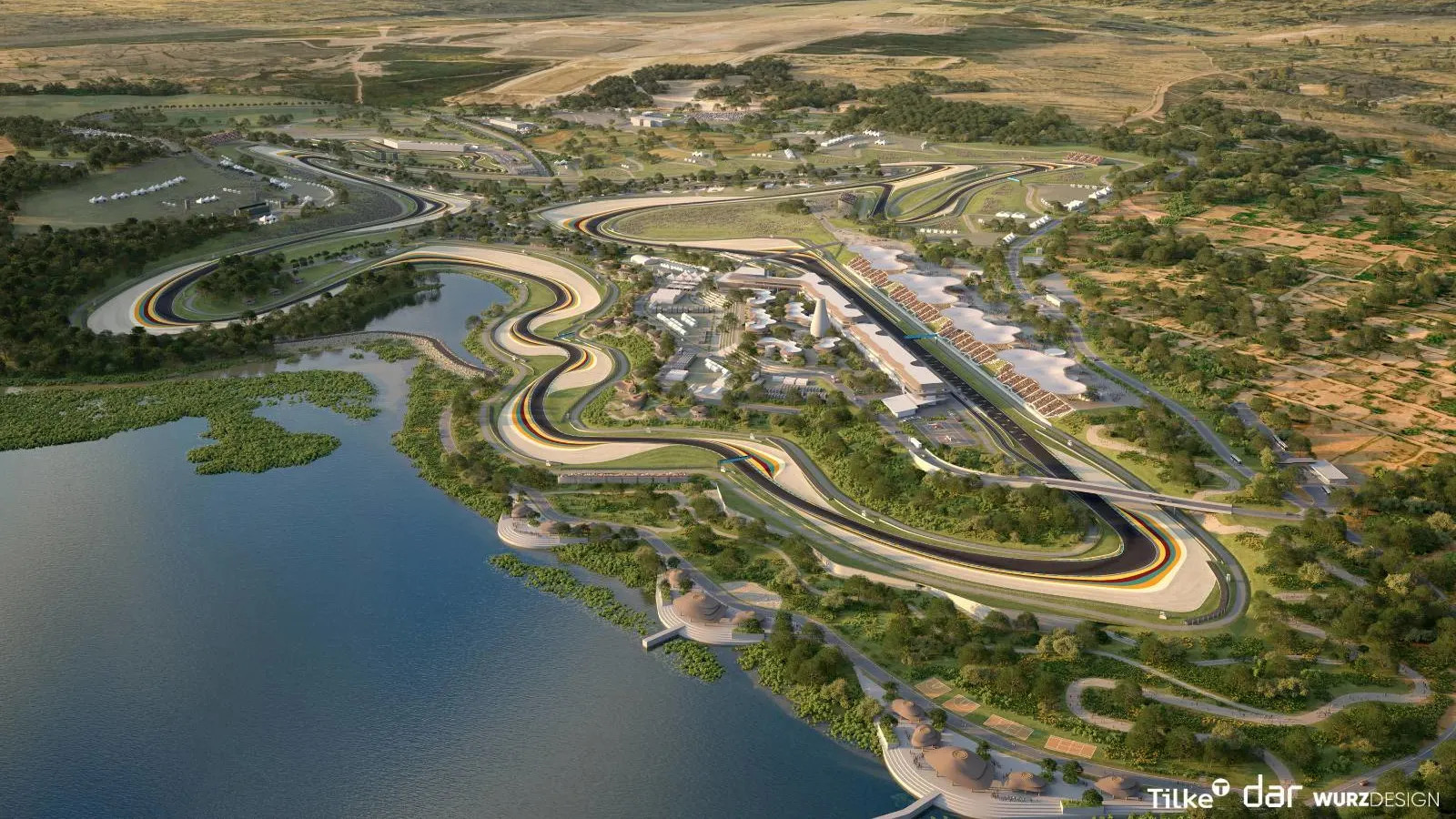 Image accompanying the official F1 announcement.
Formula 1 will return to Africa in the early 2030s after Rwanda agreed a 10-year deal to host an African Grand Prix, the sport’s leadership announced on October 13, 2026. The agreement was presented by Rwanda’s President Paul Kagame alongside senior figures connected to the circuit development, with Formula 1 CEO and President Stefano Domenicali framing the decision as a major milestone in the championship’s longer-term goal of staging races on the continent.
Domenicali said, “It will be remembered as one of the most significant days in the history of Formula 1,” following the announcement that the championship will hold an African Grand Prix from the early 2030s. The project is positioned as part of F1’s sustained ambition to return to Africa, with Rwanda offering what organizers described as long-term viability and a platform to build beyond a single event.
Rwanda’s officials linked the race to tourism, sports and entertainment development, and to wider participation across the continent. Kagame told the gathering that “Partnerships like the one we are building help break this cycle,” referencing longstanding claims that African athletes contribute significantly to global sport’s commercial value while the continent has received comparatively little in return. Kagame also said Rwanda is “a small country” but believes in using sport to develop the nation and “the wider continent,” adding that F1’s plans are intended to consider Rwanda “in the context of a continent.”
The economic case presented alongside the announcement rests on the impact F1 events have previously generated for host nations. Formula 1 organizers cited data suggesting events typically generate “in excess of £100 million of annual economic impact,” and Rwanda’s Jean-Guy Afrika, CEO of the Rwanda Development Board, said the aim is to make the initiative “bigger than just Rwanda.” Afrika also explained the choice of the “African Grand Prix” name, saying that calling it “Kigali Grand Prix” or “Rwanda Grand Prix” could feel “slightly exclusive,” and that the broader label is intended to help attract partners across a wider effort.
Track development is a central focus because Rwanda’s calendar slot is described as arriving in the early 2030s, contingent on building a circuit. Designers Carsten Tilke, of Tilke Engineering, and ex-F1 racer Alex Wurz, of Wurz Designs, were identified as leading the circuit concept. The venue is planned for Bugesera, near the area where Kigali’s new international airport is due to open in early 2028, placing the project alongside an infrastructure expansion.
Wurz said the choice of location is driven by the Great Rift Valley’s terrain. He described discussions that considered options including a street circuit, moving to other sites and even using the old airport, before settling on Bugesera after the team “actually saw it” and concluded the natural landscape already offered the “perfect topography.” Wurz described the planned concept as “two hills with the lake below,” enabling a course that drives up and down the surrounding scenery.
According to the project description, the circuit will be 6 kilometres long and run anti-clockwise, with 17 corners planned. While the complete track layout has not yet been released, Wurz said he has completed “thousands” of laps in simulation and that the design includes 197 metres of elevation change across a lap, with cambered turns and banking. Tilke said overtaking and multiple strategic approaches were important design goals, linking those objectives to the desire for both “a nice Qualifying” and “a nice race.”
Both designers also emphasized the spectator experience. Tilke said the focus is for fans to be close to the circuit, “must feel the track, must be part of it,” describing it as “really is a roller coaster track.” The wider facility concept is described as incorporating paddock buildings reflecting Rwandan architecture, with a village ethos and a “classic red dirt look.” Organizers also said the multi-purpose facility is intended for concerts and other major events.
The investment plan extends beyond the grand prix venue itself. The project includes a karting facility aimed at long-term grassroots support, a driving experience centre and off-road courses. Organizers also noted the effect of altitude: Kigali sits around 1,500 metres above sea level, which they say will make the circuit among the highest on the F1 calendar, with Mexico City listed at 2,200 metres for comparison. Wurz said simulations factor in performance implications, explaining that reduced air pressure leads to less aerodynamic grip and that camber will help counter that effect.
Wurz added that the design work incorporates detailed simulation considerations, including how camber changes could help during tyre degradation, and how tyre temperatures into corners may influence the balance of advantage for drivers defending on approach to subsequent straights. He concluded that “it’s going to be a drivers’ track,” and suggested the course would become “one classic of a track” shortly after it arrives on the calendar, describing the new venue as a “cherry on the cake” for enthusiasts.
Domenicali, Kagame and Rwanda’s development leadership presented the announcement as the start of a longer process: securing a long-term hosting agreement, building a high-impact facility in Bugesera and using the African Grand Prix branding to create a continental platform. The final competitive picture—such as exact race weekend details—will depend on future release of the full layout and subsequent F1 calendar confirmations, which were not included in the announcement.
Reporting source: F1 official update