
Singapore’s first Sprint weekend at Marina Bay puts drivers under extra strain
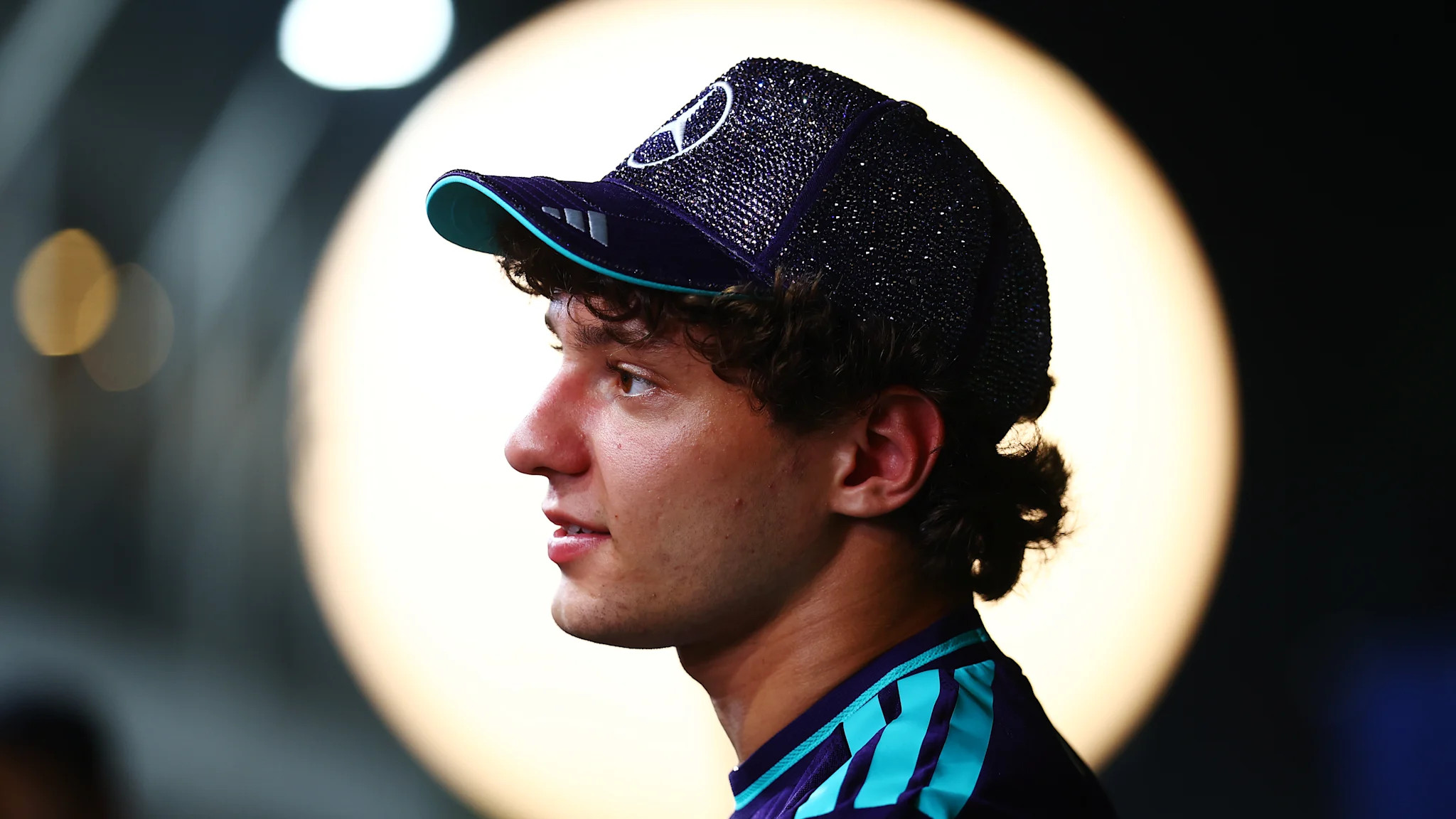 Image accompanying the official F1 announcement.
Singapore’s Marina Bay Street Circuit will host a Sprint for the first time this weekend, adding a new layer of difficulty for teams and drivers in a venue already known for rapidly changing conditions. As with other street races, Singapore tests confidence and speed as drivers build up their understanding of the circuit during the weekend leading into Qualifying—except the usual rhythm is complicated by the event’s night timing.
Beyond the typical grip ramp-up seen on street tracks, Singapore’s transition from daylight to darkness changes how the car behaves on-track. The Formula 1 schedule also packs the workload into a demanding window, with early-morning finishes for drivers and team members, placing extra emphasis on preparation and efficient execution when track conditions shift between sessions.
This year’s added Sprint format further compresses the learning process. According to the preview, teams and drivers will have only Friday FP1 to “get their eye in” before Sprint Qualifying—meaning drivers must reach the limit earlier than they usually would at a street venue. The practical consequence is heightened risk in the initial steps of the weekend, because there is less time to correct course once familiarity is expected to arrive.
The weekend’s session-by-session conditions also create a wider gap than normal. The practice session is held in daytime, Sprint Qualifying follows at night, and the Sprint itself is set to take place in sunshine—an unusual combination that makes it harder to hit a single “set-up sweet spot” that works across different environmental demands. World Championship leader Kimi Antonelli described the challenge as “very interesting,” emphasizing that a city circuit evolves so quickly that it will be “so different from session to session,” with FP1 in the day and Qualifying at night.
Max Verstappen focused on the importance of establishing a strong baseline in FP1. He noted that in daylight there is “a little bit less grip,” and the tyres may be “a little bit harder” on them, but he argued that getting the right balance early should help carry performance through the rest of the weekend. Verstappen also stressed that Sprint weekends are hectic when it comes to making the right choices with limited information.
Lewis Hamilton, speaking on how well his team typically starts FP1, suggested that Ferrari can be expected to be competitive from the earliest point of the weekend. He credited strong preparation work, including simulation efforts, for helping ensure the car is rarely “a terrible place” at the start of FP1, even if performance can fluctuate from session to session. He underlined that with only one practice session, “everyone’s in the same boat,” and results may swing quickly.
Alex Albon added a specific explanation for day-to-night effects, tying it less to temperature than to the way the sun influences tyre behaviour as it rises and sets. He said tyres are easier to get up to temperature earlier in the weekend, but that once the sun drops, the tyres respond differently—requiring drivers to adapt rapidly as the grip window changes.
The preview also singled out Arvid Lindblad as an especially tough test case, citing him as the only rookie in the field. Lindblad said he has already learned other tracks on Sprint weekends this season, but Singapore’s mixture of daylight and night sessions reduces how much similarity there is across the five sessions. He also warned that, so far, he has only seen the wall-lined circuit in the simulator, meaning building confidence without prior on-track repetition may be harder.
Lindblad referenced how the confidence-building process often plays out on street circuits and noted that the Sprint format makes it more difficult because there are fewer sessions to get comfortable. He pointed to a lesson learned from earlier street-circuit outings, where he crashed twice in FP2, and framed the immediate task as finding the right balance to enter Qualifying confident despite the tighter timeline.
For drivers and teams, then, Singapore’s first Sprint weekend is not only about coping with a night race and a street circuit’s evolving surface. It is also about making early setup and confidence decisions with less runway than usual—right when the track, tyres and conditions are set to shift quickly from session to session.
The key takeaway from the drivers’ comments is consistent: with limited practice time, early FP1 performance and rapid adaptation to day-to-night tyre response could be decisive. In Singapore, where the circuit’s character makes passing difficult and track evolution can be swift, getting the car into the correct window at the right moment may define where each driver ends up after Sprint Qualifying and the race that follows.
Reporting source: F1 official update