
Zak Brown says McLaren must “do a better job” after 2026 title challenge fell short
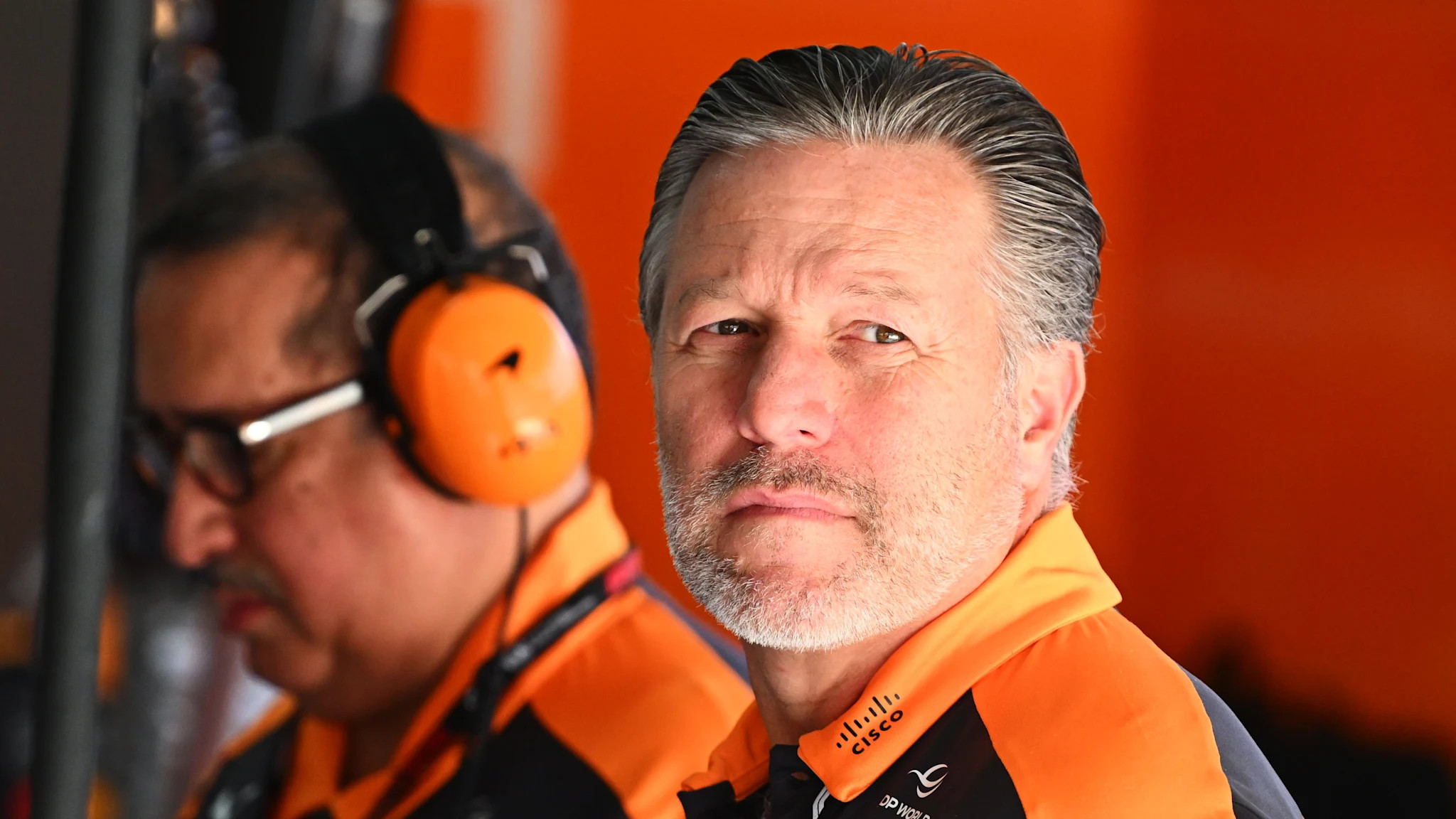 Image accompanying the official F1 announcement.
McLaren CEO Zak Brown says the team’s inability to mount a sustained challenge for the 2026 championships came down to a combination of regulation disruption, development constraints, and a need for the squad to improve how it executes going forward. While acknowledging that progress appeared later in the year, Brown emphasized that he did not want to frame the outcome as a set of “excuses,” insisting McLaren must simply “do a better job.”
Brown’s comments followed a 2026 campaign shaped by the start of major technical changes. With new technical regulations introduced for the season, McLaren lost ground to rivals including Mercedes and Ferrari early on, and despite improvements later in the year the team finished the campaign in fourth place in the constructors’ standings. The deficit to third-placed Red Bull was described as 17 points, underlining how narrowly the team’s late-season momentum translated into a championship fight across the full schedule.
Brown addressed one potential contributing factor in the team’s approach to development: the timing of car work. He said McLaren’s 2025 programme extended later than some rivals, adding that other teams effectively switched focus sooner toward the 2026 ruleset. According to Brown, that meant McLaren spent less time in areas such as wind-tunnel preparation once the season pivoted, because competitors who claimed the 2024 championship were in a position to secure more of that development capacity.
He also drew a clear comparison between McLaren and works teams when new technology arrives. Brown said that because McLaren is not a works team, it faces a “lag” in understanding how systems work under the new rules. He used the power unit as an example, arguing that knowledge levels can differ substantially between works squads and non-works teams early in a new technical era—though he said McLaren had been catching up during 2026.
Importantly, Brown stressed that the overall message should be improvement rather than justification. “We’ve just got to do a better job,” he said, even as he described the team’s progress in closing the knowledge gap. In his framing, the goal is to convert the lessons from 2026 into measurable performance gains rather than to interpret the season’s results as unavoidable.
Looking ahead, Brown said McLaren already has several technical learnings it will apply to its 2027 challenger. He highlighted weight as a major issue across the grid, explaining that a shorter wheelbase can enable a lighter car, which then affects how consistently performance can be delivered throughout different parts of a race.
Brown also pointed to vehicle behaviour in slower corners, saying McLaren was not “great” there and that the team has learned a great deal over the course of 2026. He referenced work across power unit understanding and deployment, alongside continued learning across related systems that the team is still developing.
With those areas in mind, Brown said McLaren expects to make “a lot of takeaways and changes” as it transitions into 2027. The CEO’s remarks place McLaren’s priorities squarely on translating 2026’s regulatory-era education into engineering decisions—especially on car weight, slow-speed performance and power unit deployment—while improving overall process so the team is better positioned to fight at the front from the start of the new season.
Brown’s account also implicitly contrasts where McLaren’s season turned versus where it did not. The team’s improvement was evidenced by race wins for Lando Norris later in 2026, including victories in Hungary, the Netherlands and Sao Paulo, but the overall championship picture still ended with McLaren fourth in the constructors’ standings and a substantial gap to Red Bull.
Taken together, Brown’s explanation outlines a practical blueprint for McLaren’s next development cycle: accept that the 2026 ruleset created an early disadvantage, focus on closing the engineering and operational gaps versus works teams, and ensure the team’s preparation and learning pipeline deliver better results from the first part of the 2027 season rather than relying on mid-year recovery.
Reporting source: F1 official update