
Jerry Dipoto says Mariners are “open to listening” on trades involving starting pitchers
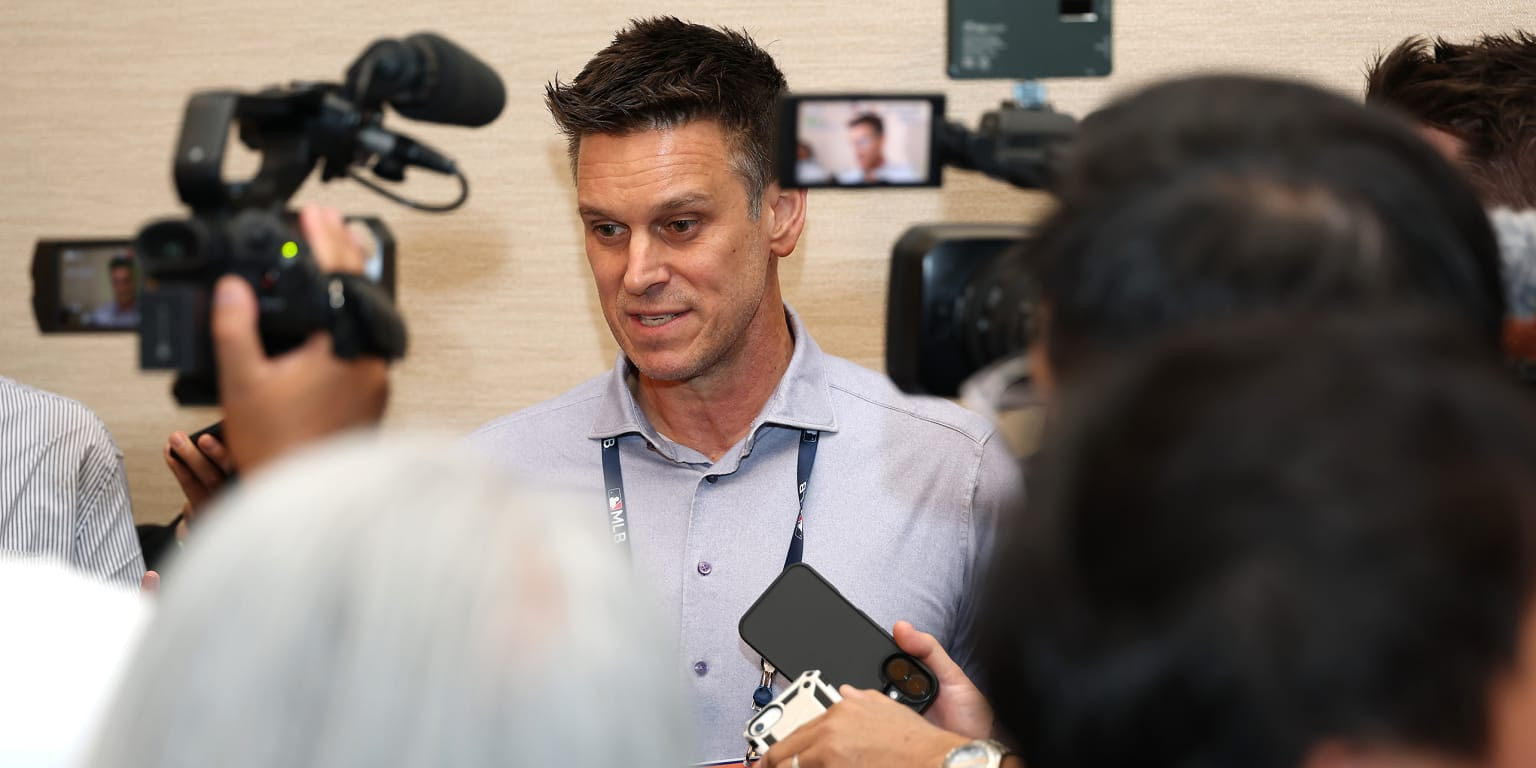 Image accompanying the official MLB announcement.
Seattle Mariners president of baseball operations Jerry Dipoto said he is willing to listen to trade proposals involving the organization’s starting pitching, a notable shift from the team’s more rigid posture on dealing starters in recent offseasons. Speaking with reporters at the General Managers Meetings in Las Vegas this week, Dipoto said the club “has always been open to listening,” and that Seattle has “sometimes been the protagonist in engaging.”
Dipoto emphasized that any movement would not come easily, describing Seattle’s baseline preference as keeping its pitchers. “It’ll take a lot for us to move one,” he said, while noting that the Mariners’ interest is not in trading for its own sake but in improving the club through access to a hitter or an upgrade Seattle might not reach through prospect packages, position-player deals, or free agency.
The Mariners’ openness to trading a starter emerges against a winter backdrop in which several of their rotation pieces are viewed as manageable within the organization’s current player-control structure. Dipoto said that clubs have already reached out to gauge the availability of Seattle’s starters, and he framed that interest around the flexibility that depth creates during trade season, while also pointing to the likely difficulty of convincing Seattle to give up pitchers who the team sees as both valuable and versatile.
This is not the first time the Mariners have weighed pitching trades in the modern era, but it is a meaningful confirmation that the conversation could return this offseason. The first domino in recent years came at the 2026 Trade Deadline, when Seattle traded Luis Castillo to the Chicago White Sox. Seattle’s decision was described in the league’s reporting as both cost-cutting and a way to open a spot for top prospect Kade Anderson, who made his debut three weeks after the trade.
After the Castillo deal, Seattle also considered the possible movement of other rotation options, including Emerson Hancock and even George Kirby. According to the same reporting context, those discussions did not become a broader sell-off because Seattle was still aiming to salvage its season at the time, leaving the club to stop short of dismantling its rotation depth.
Dipoto characterized the current state of Seattle’s pitching group as both deep and internally developed. He said the Mariners have “eight deep,” and added that he views that group as capable of serving as anything from a competent Major League starting pitcher to an elite-level Major League starter. The club’s flexibility, he said, is enhanced by the fact that these are homegrown players, which can make Seattle a common call point during trade windows.
The Mariners’ internal nucleus includes Logan Gilbert, George Kirby, Bryan Woo, Bryce Miller and Emerson Hancock as the established rotation core, with Kade Anderson representing the near-term addition expected to shape the next chapter of Seattle’s pitching depth. Dipoto also referenced the anticipated 2027 ascent of right-hander Ryan Sloan, described as MLB Pipeline’s No. 11 overall prospect, along with the return of Logan Evans from an internal brace procedure. Together, that sequence, combined with the existing group, is positioned to keep Seattle well-stocked for Major League starts.
Dipoto also connected the potential trade calculus to player contract status. He noted that, besides Logan Gilbert, much of the group is under club control and either in arbitration or pre-arbitration, a structure that generally can make the pitchers more affordable than typical free-agent starters. That affordability, in turn, is a practical element in why Seattle could be a trade target even if it tries to hold its overall pitching plan together.
While the Mariners’ rotation depth is central to the trading discussion, Dipoto said Seattle’s more immediate offseason priorities extend beyond pitching. He stated that the club’s needs include at least one bat, and possibly more, along with “legitimate bullpen help.” He described those bullpen improvements as part of a broader effort to strengthen specific areas of the roster rather than broadly reshaping it through pitching deals alone.
In laying out how Seattle would approach the market, Dipoto said he wants to improve defensively and find ways to augment the offense. He also connected bullpen reinforcement to the idea of “leverage,” framing the bullpen acquisitions as targets rather than general roster filler. That approach aligns with a team that, as Dipoto suggested, has tended to address roster needs through trades more than through free agency.
Dipoto indicated that if the Mariners can identify a player who ranks among the top options on their list, they would act, even if it requires waiting. “If we can get the guy who’s No. 1 or 2 on our list in November, we’re going,” he said. He added that if that specific outcome does not occur, January or February would be the fallback window, suggesting the club expects the trade process to unfold as the market develops rather than forcing decisions early.
For Mariners fans, the central takeaway from Dipoto’s comments is that the franchise’s reputation as a club that holds tightly to pitching depth may be tested again. Seattle has shown that it can trade from its starting rotation when it believes it can improve the overall roster—most recently with Luis Castillo—while still maintaining a path to replenishing through its farm system. This week’s acknowledgement that other teams have already reached out, paired with Dipoto’s insistence that “it’ll take a lot for us to move one,” sets up a winter where Seattle’s starting pitchers remain both a strength and an offseason bargaining chip.
Key context from the Mariners’ 2027 planning also suggests the organization believes its rotation is not dependent on any single starter. With the club expecting additional pitching reinforcements—including the internal brace recovery for Logan Evans, and the anticipated rise of Ryan Sloan in 2027—Seattle can plausibly consider trades without undermining its long-term starting pitching plan. That gives Dipoto’s “open to listening” stance a clearer practical rationale: Seattle can engage the market because it believes the rotation can absorb change while still remaining “eight deep” in its internal evaluation.
Reporting source: MLB official update