
MLB explains how players can receive Rookie of the Year votes in multiple seasons, with Mets’ Nolan McLean among latest cases
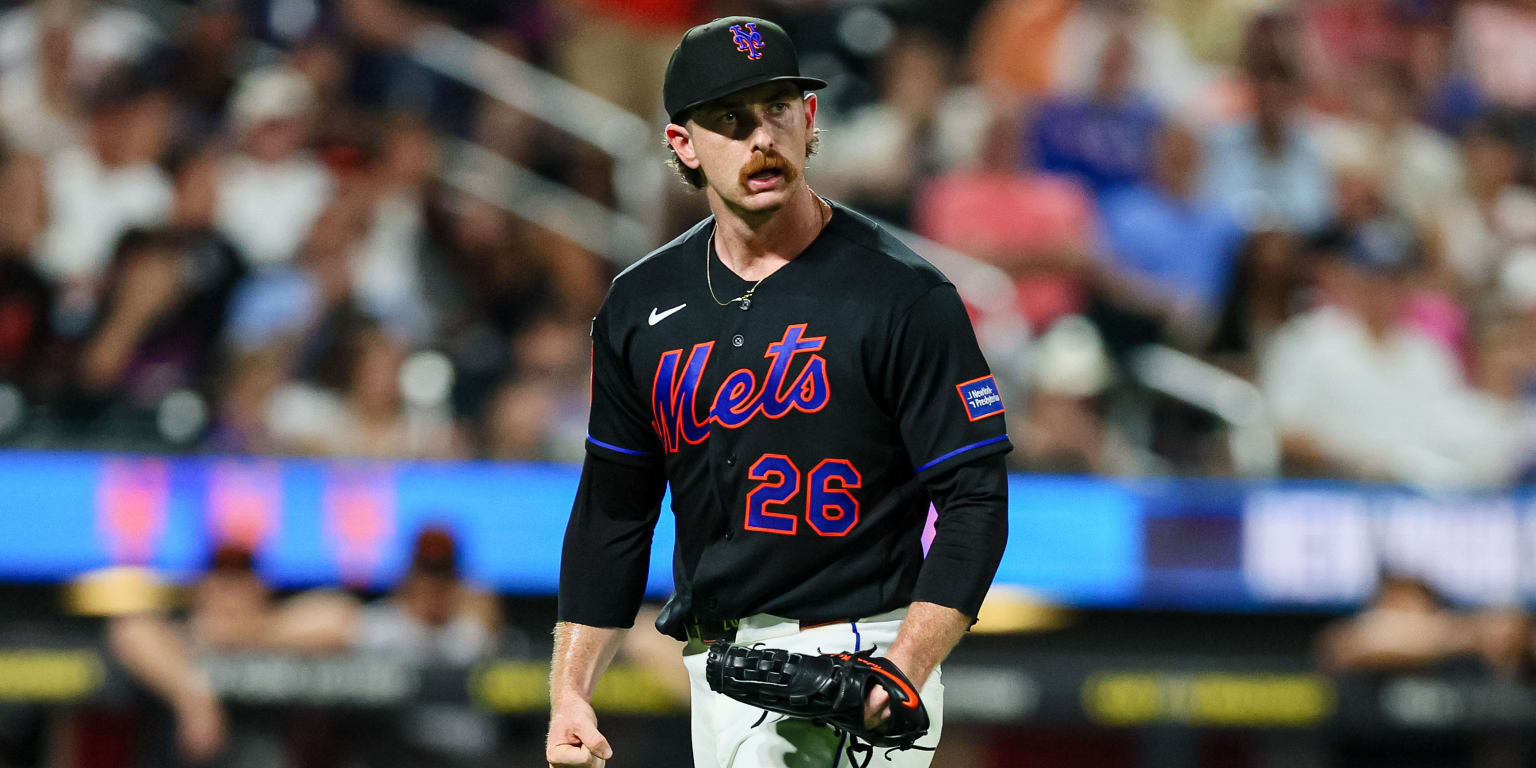 Image accompanying the official MLB announcement.
Major League Baseball says a player’s “rookie season” can span multiple years because rookie eligibility is determined by how much MLB experience a player has accumulated before the start of a given season, rather than whether he has only debuted once. Under MLB’s rules, a player is considered a rookie unless he has exceeded at least one of three thresholds in any previous season: 130 at-bats, 50 innings pitched at the MLB level, or 45 total days on an active MLB roster prior to Sept. 1. MLB notes that those criteria can allow a September callup to remain rookie-eligible again the following year if the player has not surpassed the limits.
MLB highlighted one of the more uncommon modern examples: Mets pitcher Nolan McLean, who became the third player this decade to receive Rookie of the Year votes in multiple seasons. According to MLB, McLean first reached the major leagues in August 2025 and produced eight starts, earning two fifth-place votes for the National League Rookie of the Year Award. MLB reported that McLean’s 2025 work included a 2.08 ERA over 48 innings with 57 strikeouts, and that his vote total tied with the Brewers’ Jacob Misiorowski for 11th place overall in the NL ROY voting.
Because McLean had not crossed the 50-inning threshold, MLB says he remained rookie-eligible in 2026. MLB describes the 2026 season as another strong run on the mound for the right-hander, with 179⅔ innings across 31 starts, a 3.16 ERA, and 194 strikeouts. In that year’s National League Rookie of the Year voting, MLB reports that McLean finished fourth, collecting six second-place votes and seven third-place votes.
MLB also points to a distinct situation from the 2020 and 2021 seasons, when the structure of rookie eligibility shifted because of the shortened 2020 schedule. MLB says that for 2020, days of service time on the MLB roster counted even if they came after Sept. 1, a distinction that it says reduced the number of players who could be eliminated by that date compared with other years. In addition, MLB notes a further stipulation for the 2020 award: players who won Rookie of the Year in 2020 were ineligible to repeat as winners in 2021, even if they otherwise would have qualified under the standard rookie limits.
Within that framework, MLB says that among the 19 players who received Rookie of the Year votes in 2020—along with the 17 who received votes but did not win—four players remained rookie-eligible in 2021. MLB identifies those players as Ryan Mountcastle (who received one vote in 2020 and finished tied for eighth in the AL), Ian Anderson (who received one vote in 2020 and finished tied for seventh in the NL), Ke’Bryan Hayes (who received five votes and finished sixth), and Sixto Sánchez (who received one vote and was tied for seventh). MLB adds that Sánchez did not pitch in 2021 or 2022 and Hayes missed time in 2021 with injury, so neither received any votes.
For the two players whose vote-getting trails continued, MLB says Mountcastle finished sixth in the AL Rookie of the Year voting in 2021, while Anderson finished fifth in the NL. MLB’s summary of those results connects the roster-service rules of 2020 to continued Rookie of the Year consideration in the following season.
MLB further notes that the pattern of earning votes in multiple rookie-eligible seasons is rare not only in the modern era but across the history of the award, which it says has existed since 1947. MLB states that, based on the limits and voting framework it lays out, only one player has received votes for the award in multiple years prior to the latest decade-spanning examples. That player is identified as Gregg Jefferies of the Mets, with MLB describing his vote-getting story across 1988 and 1989.
According to MLB, Jefferies first appeared with the Mets as a September callup in 1987, but his vote-getting began the next year. MLB says he was a late-August callup in 1988, played 29 games, hit .321 and slugged .596, received three votes for National League Rookie of the Year, and finished tied for sixth. MLB adds that at the time, Jefferies had 115 career MLB at-bats, with 109 of them in 1988 and six in 1987, and that because most of his games occurred after Sept. 1, he had not reached the service-time limit in either season.
MLB says Jefferies remained rookie-eligible for the following season as well. MLB reports that he made the Mets’ Opening Day roster in 1989 and played in 141 games, hitting .258 and receiving 18 votes to finish third as Cubs outfielder Jerome Walton won the award in the NL. MLB also adds a historical detail tied to that same 1989 vote cycle: it says Charlie Hayes, the father of Ke’Bryan Hayes, also received National League Rookie of the Year votes that year.
Taken together, MLB’s account explains why “rookie season” is often described as singular in baseball discussion while still allowing for multiple years of eligibility—and therefore multiple opportunities to earn votes—when service time, innings, and at-bat totals stay under the league’s thresholds. MLB frames the latest case of Nolan McLean as part of that broader, rules-driven outcome, alongside earlier examples from 2020-21 and the late-1980s when Gregg Jefferies earned votes in separate rookie stints.
MLB’s description also clarifies how the eligibility clock is measured. Rather than requiring that a player debut early in one year and never reach another milestone, the league’s approach looks backward at total MLB experience accumulated before specific points in the season. That is why MLB says the combination of late-year callups and roster status can keep a player eligible into a subsequent season, enabling the rare circumstance of receiving Rookie of the Year votes again later.
Reporting source: MLB official update