
Rangers commit to playing without Igor Shesterkin as rookie Dylan Garand steps in
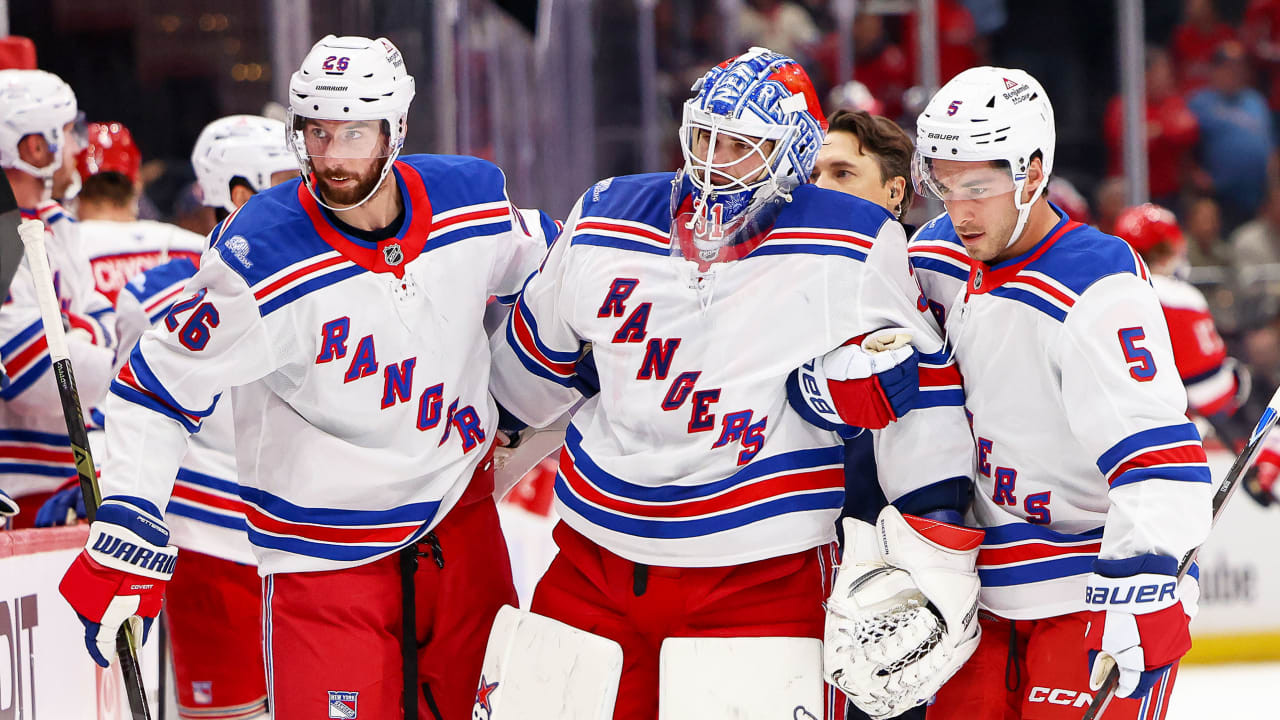 Image accompanying the official NHL announcement.
The New York Rangers are preparing to move forward without starting goaltender Igor Shesterkin after the team announced he suffered a season-ending lower-body injury, with details of the injury not released by the organization. According to NHL coverage published on Oct. 11, Rangers players and staff have emphasized readiness for the first of 78 regular-season games this year without Shesterkin, following his injury in Washington two nights before Sunday’s game.
The Rangers’ next visible step came Sunday at Madison Square Garden, where New York defeated the Vancouver Canucks 6-2. In that win, the goalie for the foreseeable future, absent a trade, was rookie Dylan Garand, who entered the game with limited NHL experience but strong numbers in his early appearances. The source says Garand made 19 saves against Vancouver in the Rangers’ victory.
Before Sunday, Garand’s NHL resume entering the matchup included five appearances, four starts, three wins, and a 1.31 goals-against average with a .954 save percentage and one shutout, as outlined in the provided material. The Rangers’ approach to the situation has been to treat Garand’s opportunity as a defined assignment rather than a temporary stopgap, even as the team’s goaltending circumstances have changed quickly.
Rangers captain J.T. Miller addressed the shift in New York’s goaltending plans, describing it as a situation that “not a lot needs to be said,” and emphasizing that “everybody has to pull a little more weight.” The source attributes Miller’s comments to his remarks about Shesterkin as a pillar and leader for the club, describing the loss as “devastating” while also stating the Rangers feel confident in their play regardless of who is in net.
The material also places Garand’s situation in a broader organizational timeline. It notes that in July the Rangers acquired goalie Joonas Korpisalo in a trade with the Boston Bruins on July 1, characterizing the move as providing depth and competition for Garand rather than immediately handing him the backup role. The source further states that about two weeks before opening night in Boston, the Rangers placed Garand on waivers with the intent to send him to the Hartford of the American Hockey League, and that he cleared waivers, meaning the other 31 NHL teams did not claim him.
That sequence changed again when Korpisalo sustained a lower-body injury that would keep him out week-to-week, leading to Garand being brought back to New York for opening night. The source includes remarks from Rangers coach Mike Sullivan regarding those roster decisions, saying the business of the game requires difficult choices, while stressing that the club believes Garand is capable and that he would now have an opportunity to establish himself.
Within the provided coverage, Garand’s earlier NHL work is also tied to the Rangers’ current need for reliable starts. The source says Garand recorded a 22-save shutout in a 2-0 win at the Detroit Red Wings on Oct. 2, and it also describes his relief effort in Washington on Friday, when he made 11 saves on 12 shots in a 3-1 loss after Shesterkin left the game. In the same provided account, Garand’s season-ago record is summarized as 2-0-1 with a 1.62 GAA and a .948 save percentage in three starts.
Sullivan’s message in the source similarly links confidence in Garand to what the Rangers are expecting from a player handling a sudden change in role. The material attributes Sullivan’s comments to describing Garand’s confidence and the team’s belief in him, while also noting that the organization had confidence “a couple of weeks ago” when it made difficult decisions involving waivers and goaltending depth.
While the Rangers have pointed to Garand’s readiness, the provided report underscores the scale of Shesterkin’s impact on New York’s game beyond the save percentage. It states that Shesterkin is not only described as elite at stopping pucks but also as arguably the NHL’s best puck-handling goaltender, regularly engaging in retrieving the puck and initiating breakouts to support the club’s transition game. The coverage ties Shesterkin’s puck skills to forechecking dynamics, noting that opposing teams may adjust their pressure and dump-in routes to keep the puck away from him.
Rangers defenseman Sean Durzi is quoted in the provided material describing Shesterkin as “the best that I’ve seen play the puck,” and noting that it is a pre-scout consideration for opponents. Durzi also discussed the defensive adjustments the Rangers are planning with Garand in net, emphasizing communication as the key component. The source attributes Durzi’s comments to the idea that the team must “make it easy” for the goalie by making calls early and racing to positions, while focusing on clear communication with the new starter.
The immediate consequence of the season-ending injury, as reflected in the provided coverage, is that Shesterkin will not return and the Rangers must complete the remaining work of adapting their system accordingly. Sullivan’s remarks in the source reiterate that the club cannot control the scenario but can control how it reacts, framing opportunities for other players to step up while keeping focus on execution on the ice.
The NHL coverage concludes with a product and viewing-navigation note, but the essential news in the supplied material is the Rangers’ confirmation that they are moving forward without Shesterkin and that Garand is set to handle the starting workload unless New York changes its roster through a trade. As the club continues its regular-season schedule following Sunday’s win over Vancouver, the next practical test will be whether New York’s communication and transition planning stabilize around Garand as the replacement begins a longer stretch in goal.
Research gap: The provided source does not include the Rangers’ official injury announcement text, such as the date of the roster move, the exact wording of the team statement, or any medical timeline details beyond “season-ending lower-body injury.” A follow-up check of the Rangers’ own transaction and injury-release records would be required to document those elements precisely.
Reporting source: NHL official update