
MLB highlights 16 Statcast superlatives from the 2026 season, led by Oneil Cruz and Jacob Misiorowski
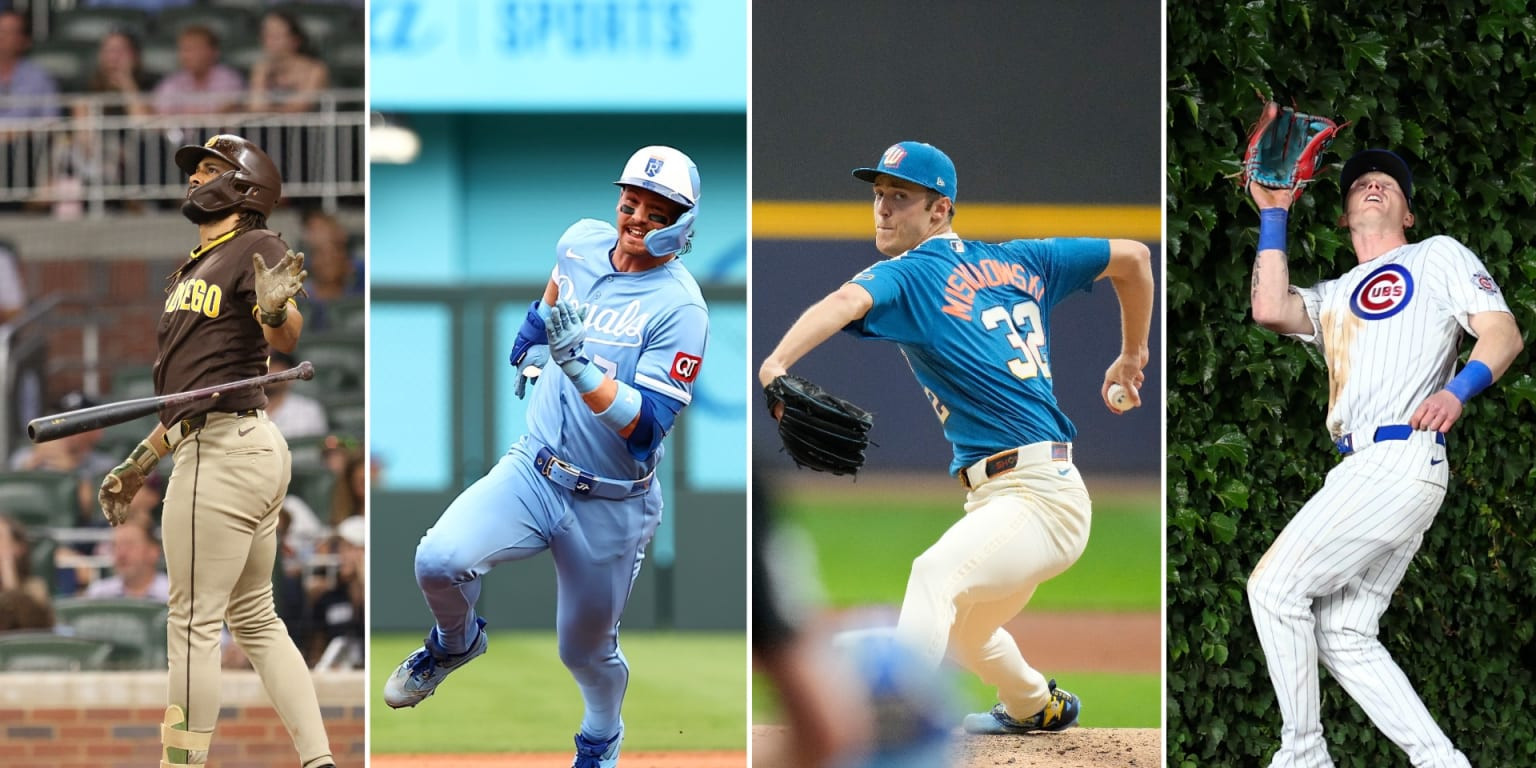 Image accompanying the official MLB announcement.
Major League Baseball has marked the 2026 season with its annual Statcast superlatives, unveiling 16 of the most extreme Statcast-tracked feats across hitting, pitching, defense and baserunning. The compilation recaps the year’s leaders in exit velocity, pitch speed, baserunning times, throwing measurements and catch metrics, with several players appearing more than once among the top items. Among the hardest-hit performances, MLB’s Statcast rankings place Pittsburgh Pirates slugger Oneil Cruz at the top with a 119.0 mph double on April 16. The highlight also notes a multi-year trend for Cruz: MLB lists 121.5 mph as the hardest-hit ball in 2024 and 122.9 mph as the hardest-hit home run in 2025, making this the third consecutive season that the Pirates player owned the year’s hardest-hit ball according to Statcast. Cruz also appears in the hardest-home-run category. MLB lists a 117.4 mph home run by Cruz on Sept. 10 as the top exit-velocity homer of 2026, while the recap emphasizes that Cruz recorded the two hardest home runs of the season. MLB attributes the second-highest homer to a 116.9 mph shot that Cruz hit off the top of the foul pole in April. For the longest home run of 2026, MLB reports a tie at 474 feet between Seattle’s rookie Lazaro Montes, listed for Sept. 8, and San Diego’s Fernando Tatis Jr., listed for July 21. MLB’s recap frames the tie by contrasting Montes’ rookie effort in Seattle with Tatis’ high-profile blast in Atlanta. In pitching, the Statcast superlatives include a fastest pitch category tied to a walk-off moment in the postseason. MLB lists an NLDS Game 2 walk-off hit by Milwaukee Brewers player Jackson Chourio at 101.3 mph, specifically describing it as the fastest pitch hit for a walk-off in the Statcast era, which MLB says dates to 2008. The play is described as a hit off National League Division Series closer Mason Miller, completed as the game ended in the Brewers’ postseason run. The fastest-pitch category is credited to Jacob Misiorowski, with MLB listing his 105.5 mph pitch on June 26 as the highest velocity recorded among the 1,300 pitches he threw in triple digits during the year. MLB also notes that only a limited group of pitchers have broken the 105 mph threshold in the Statcast pitch-tracking era, naming Aroldis Chapman, Ben Joyce and Jordan Hicks as the other pitchers who have thrown faster pitches, while identifying Misiorowski’s value as among the top in that group. MLB’s fastest-strikeout category also belongs to Misiorowski, with a 104.5 mph strikeout on June 12 and July 26. MLB’s recap states that he is the only starting pitcher on record to throw a pitch at 104 mph or faster and then record strikeouts at that velocity. The compilation also identifies very low-velocity pitching moments tracked by Statcast. For slowest pitch, MLB lists Seth Halvorsen at 32.6 mph on Sept. 19, framing the entry as a rare instance where a pitcher known for hard throwing delivered a much slower eephus-like pitch after a loss of footing. MLB further connects that moment to the slowest hit-by-pitch play, describing a scenario where the pitch “plunked” Drew Gilbert after the ball bounced. In a similar “slow for a strikeout” category, MLB lists Jose Trevino with the slowest K of the season at 39.0 mph on Sept. 9, against the Los Angeles Dodgers’ Alex Freeland. MLB’s recap describes the swing-and-miss as coming on a pitch that did not crack 40 mph, and it also references another Trevino eephus two days later that resulted in a strikeout and was tied to a 31 mph delivery against Christian Yelich. Defensive and movement categories in the Statcast list focus on highly specific measurements. MLB credits Brooks Raley with the most horizontal break on a swing-and-miss, listing 35 inches of horizontal break on April 7. MLB’s recap places Raley at the top of that category by describing a sweeper that broke nearly three feet, while also noting that the same game included another strikeout with 28 inches of horizontal break. On the baserunning side, MLB highlights the fastest inside-the-park home run with Kansas City Royals player Bobby Witt Jr. at 14.13 seconds on May 9. MLB notes that only a small set of players have gone around the bases faster in the Statcast era, and it ties the top time to Witt’s speed as he circled the bases on an inside-the-park homer. MLB’s slow-trot entry is linked to Junior Caminero, listing his 40.65-second home run trot on Sept. 15. MLB describes the sequence as an extended 40-plus-second trip after a walk-off home run, while also stating that Caminero recorded the second-longest home run trot of the Statcast era with a 38.66-second trip on a homer that sent Tampa Bay to the World Series in Game 6 of the ALCS. Additional baserunning superlatives in the list include a fastest triple by Arizona Diamondbacks player Corbin Carroll, credited with 10.82 seconds on Aug. 8, and MLB’s description links Carroll to sustained league-leading triple production. For catching and fielding execution, MLB lists Brandon Valenzuela with a 1.72-second pop time to second base on a caught stealing on June 13 while he was a rookie with the Toronto Blue Jays. Throwing plays feature prominently in the defense-driven categories. MLB names Mets prospect Carson Benge for the hardest outfield assist, listing a 103.9 mph throw on Aug. 17 that resulted in two Padres runners being thrown out at home plate in the same inning according to the recap. For infielder assists, MLB credits Elly De La Cruz with the hardest infielder assist, listing a 102.0 mph throw on Sept. 9 described as a relay that removed an inside-the-park home run attempt and credited as the first recorded triple-digit assist by an infielder in the Statcast era. The list concludes with MLB’s “best catch by catch probability” item, with Pete Crow-Armstrong listed for a 5% catch probability on May 30. MLB frames the selection around the difficulty of catching in that probability tier and describes the play as a game-ending grab against the St. Louis Cardinals, including the coverage distance and sprint speed figures MLB ties to the defensive effort. As released by MLB, these 16 superlatives collectively represent the most extreme measurements Statcast captured across a range of game situations during the 2026 season, with several top performances concentrated around repeat standout players such as Oneil Cruz and Jacob Misiorowski.
caption_PosteriorEditionCaptionRepeatCheckNeeded? N/A
caption_substitutions? N/A
Reporting source: MLB official update