
MLB qualifying offer deadline set for Nov. 2 as teams decide on one-year deals worth $23.15 million
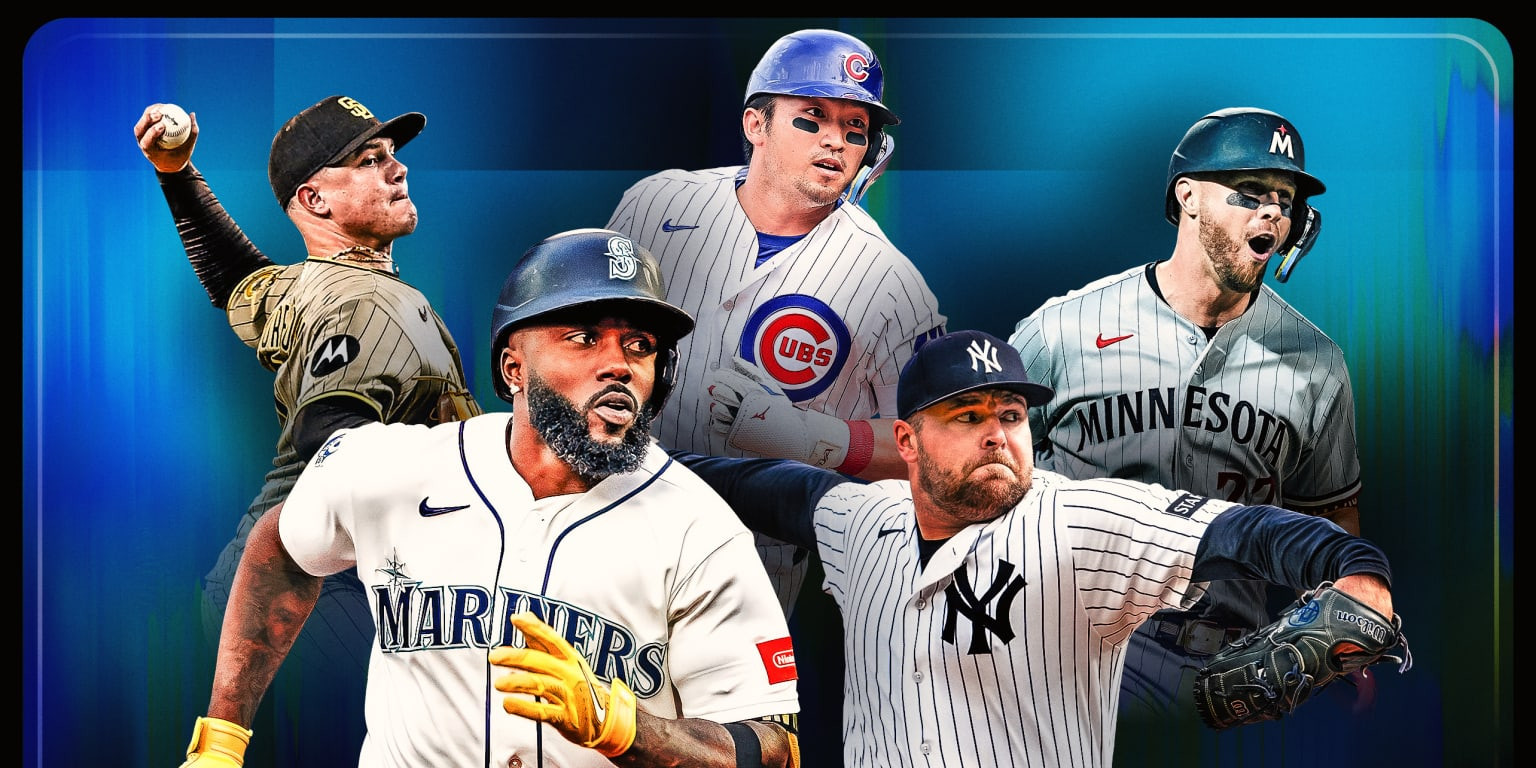 Image accompanying the official MLB announcement.
Major League Baseball’s qualifying offer process for the 2026-27 offseason moves into its decision phase, with teams set to begin extending one-year contracts before the league’s Nov. 2 deadline. MLB’s system requires clubs to choose which pending free agents will receive a qualifying offer, a one-year deal valued at the average salary of the top 125 best-paid players; for this cycle, that expected value is $23.15 million. Teams have until Monday, Nov. 2 at 5 p.m. ET to make offers, and players then have until Nov. 17 to accept.
MLB’s qualifying offer framework matters because of what happens if a player declines and signs with a different club. If a free agent does not accept a qualifying offer and goes elsewhere, the player’s new team forfeits a draft pick and the player’s former team receives a draft pick, with those compensation specifics laid out by MLB. While the process is a recurring feature of the offseason, MLB notes that acceptance rates historically have been low: since the system began in 2012, 157 qualifying offers have been issued and only 18 have been accepted, an 11% acceptance rate, though MLB points to a more recent uptick with four acceptances last year by Trent Grisham, Shota Imanaga, Gleyber Torres and Brandon Woodruff.
MLB says it expects fewer qualifying offers than usual for this cycle. In MLB’s account, the main drivers are not direct changes tied to Collective Bargaining Agreement talks, because any alteration to the process would occur in future years; the 2022-26 CBA remains in effect until Dec. 1. Instead, MLB links the expected decrease to what it describes as a relatively weak free-agent class overall, with fewer big-name players who would typically be in positions to receive a qualifying offer.
Beyond the strength of the free-agent market, MLB also identifies two specific categories of players who cannot receive qualifying offers this offseason, limiting which potential stars even enter the conversation. First, any player who appeared for more than one team in the same season is ineligible, which MLB’s piece connects to multiple 2026 in-season movers, including Tarik Skubal, Luis Arraez, Casey Mize, Freddy Peralta, Daulton Varsho, Clay Holmes and other midseason team changes. Second, MLB notes that players can receive a qualifying offer only once in their career, excluding prominent free agents who have already used their qualifying-offer eligibility, including Michael King, Imanaga, Grisham, Kevin Gausman, Gleyber Torres, Robbie Ray, Michael Conforto, Nick Martinez and Raisel Iglesias.
Because of those eligibility constraints and what MLB describes as a less predictable market, MLB says its usual tier-based format for predicting who is most likely to accept may not translate cleanly this time. In that context, MLB identifies 15 players it says are most likely to be under consideration for qualifying offers, along with whether it expects each to accept or reject. The list spans outfielders, infielders, catchers, starting pitchers and relievers.
Among the outfield candidates, MLB highlights Randy Arozarena (Mariners), describing him as coming off a career-best type of offensive season while also noting caveats about his age, defensive reputation and the manner in which the standout results arrived. MLB frames Seattle’s incentive as keeping a hitter who produced at a high level in pitcher-friendly T-Mobile Park and points to how a weaker market could make a qualifying offer more likely; MLB’s projection for Arozarena is that he receives an offer and rejects it. Seiya Suzuki (Cubs) is treated as another likely outfield option, with MLB pointing to his improved defense and his position as a consistent producer; MLB’s projection for Suzuki is not to provide a clear “slam-dunk,” but it places him in its most-likely-under-consideration group.
MLB also identifies Jake Bauers (Brewers) as a top contender for a qualifying offer, referencing his role in Milwaukee’s recent success and the jump from a prior salary to a QO-level contract. MLB’s piece notes that the Brewers face a question about paying a large premium for the current version of a player who has already dramatically improved his value, and it suggests the team could prefer alternatives such as a multi-year deal even if the qualifying offer is the immediate lever. MLB’s projection for Bauers is that he does not receive the offer. Ian Happ (Cubs) is another position-player candidate; MLB’s discussion emphasizes his profile as a steady corner outfielder and factors such as team needs, including concerns around strikeouts and platoon considerations that may influence whether Chicago wants to lock him into a one-year QO structure. MLB’s projection is that Happ does not receive an offer.
At catcher, MLB highlights Ryan Jeffers (Twins) as a player it expects could be tested in the market, describing his improved offensive production compared with earlier seasons and noting his defensive limitations. MLB also ties the Twins’ potential QO rationale to the possibility of securing draft-pick value if Jeffers signs elsewhere, especially after the Twins did not trade him at the deadline. MLB’s inclusion is as a candidate most likely to be considered for an offer, and it frames the qualifying offer as a practical bridge for a team assessing a market reset. In the infield, MLB lists Jazz Chisholm Jr. (Yankees) and discusses how shifting roles and lineup questions in New York could shape whether a qualifying offer is extended; MLB’s projection places Chisholm in the group most likely to be considered but expects the Yankees not to extend it.
For second base and first base/infielder profiles, MLB highlights Brandon Lowe (Pirates) and Ty France (Padres) as qualifying-offer candidates because of production combined with what MLB describes as defensive value. MLB notes Lowe’s reported defensive turnaround and positions him as a middle-infield bat with continued relevance if his defensive gains hold. It also references France’s history as a versatile, defense-forward option whose market value may lead to negotiation leverage. MLB’s piece provides the framework for how teams could use qualifying offers as a draft-pick and retention mechanism rather than strictly as a one-year commitment for a player’s entire future.
At shortstop/third base, MLB includes J.P. Crawford (Mariners) as a candidate that is more complex than the typical QO profile, combining strong long-term platform skills such as plate discipline with defensive concerns at shortstop. MLB’s piece also points to roster flexibility as a context for how Crawford’s role has evolved, but it projects that Crawford would be difficult to justify via a qualifying offer. For the pitching staff, MLB identifies Trevor Rogers (Orioles) and frames him as a potential QO-extension case given the Orioles’ recent workload and performance when healthy, placing him as a likely offer recipient. MLB also lists Adrián Morejón (Padres) as a high-velocity bullpen target who may be less likely to accept a one-year deal, with the implication that the Padres could use the QO to preserve options such as retaining him briefly or obtaining draft-pick compensation if he declines.
Rounding out MLB’s list, it includes Matthew Boyd (Cubs) in the category of players most likely to be under consideration, placing emphasis on how his recent contractual setup and remaining market window could influence whether Chicago views a qualifying offer as a mechanism to avoid losing his value for nothing. The MLB.com piece frames the overall exercise as one of uncertainty under eligibility constraints, with the qualifying offer’s acceptance outcome depending on player-market fit and whether clubs believe the one-year structure is the right tradeoff in a season where MLB expects fewer QOs than normal.
For players and teams, the key operational dates remain clear: qualifying offers must be extended by Nov. 2 at 5 p.m. ET, and decisions on acceptance are due by Nov. 17. The league’s system then turns on the acceptance outcome, with draft-pick compensation applying when a player declines and signs elsewhere, according to MLB’s published rules. MLB’s projections identify likely candidates for consideration, but the offers themselves—by which teams act and which players accept—will determine the final shape of the 2026-27 qualifying offer list.
Reporting source: MLB official update