
MLB qualifying offer decisions: David Bednar and Ryan Jeffers accept, shaping the early offseason market
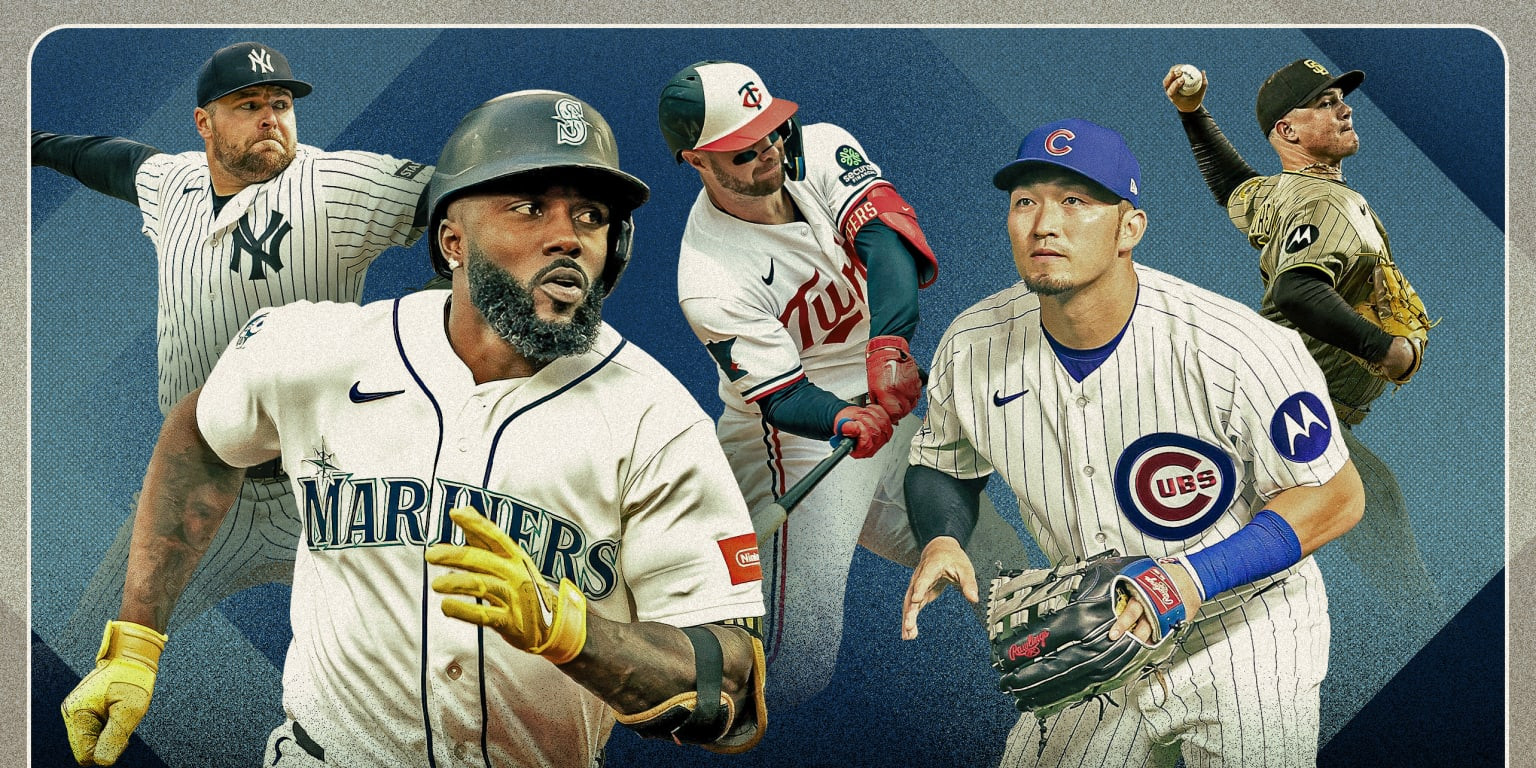 Image accompanying the official MLB announcement.
Major League Baseball’s qualifying offer process has started to narrow the player market for the weeks ahead after David Bednar (New York Yankees) and Ryan Jeffers (Minnesota Twins) accepted their qualifying offers for 2027, the league having extended those offers to the players in advance of free agency. The same process earlier in the cycle produced far fewer acceptances than declines, underscoring how often qualifying offers end with a player hitting the open market for multi-year deals or other clubs’ bids.
According to MLB’s reported market recap, only 18 of 157 players who had received qualifying offers prior to 2026 accepted them, a roughly 11% acceptance rate. The league’s provided context also notes that four of those acceptances occurred in a single year, when Trent Grisham, Shota Imanaga, Gleyber Torres and Brandon Woodruff accepted qualifying offers, illustrating that acceptance outcomes can concentrate in specific offseasons rather than spreading evenly across years.
This year’s acceptance count, as laid out in the league’s market explanation, includes two of the eight players who were extended qualifying offers: Bednar and Jeffers. With Jeffers off the free-agent market, the catcher market is more likely to lean on alternatives, and the league’s analysis points to trade activity as a potential path for teams seeking catching help.
With Jeffers no longer available as a free agent, the league’s market view is that clubs looking for catching support may need to explore the trade market more aggressively. Even with Jeffers off the open market, MLB notes that several catchers remain available in free agency, naming Carson Kelly, Tyler Stephenson, Austin Hedges, Gary Sánchez, Christian Vázquez and Jake Rogers as still out there, while distinguishing Kelly and Stephenson as the only options viewed as everyday starters.
MLB also flagged that trade availability could differ from free-agent availability, even when a team’s internal depth changes the perceived urgency of the position. The league’s recap cites Colorado Rockies prospect Hunter Goodman as an example of a catcher who has been the subject of trade interest in the past, but adds that the Rockies kept him because he remains under club control for three more seasons, a factor that would typically reduce the likelihood of a sale unless approached with the right package.
On the trade market, the league’s market framing also highlights Atlanta Braves catcher Sean Murphy as a more attainable option than Goodman. MLB states Murphy was limited to 33 games in 2026, but still retains the pitch-calling and arm attributes that can attract teams with urgent needs behind the plate. The league’s recap further suggests that teams with stronger catching depth—specifically the St. Louis Cardinals with Pedro Pagés, Jimmy Crooks and Ivan Herrera, and the San Diego Padres with Luis Campusano and Freddy Fermin—could also consider trading a backstop during the offseason.
The qualifying offer decisions also ripple through relief pitching and bullpen planning. With Bednar returning to the New York Yankees in a defined closer role, MLB identifies Adrian Morejon as standing out among available free-agent relievers. The league’s market explanation frames Morejon as a high-leverage piece that teams may prioritize as they build late-inning depth in the wake of fewer guaranteed roster options created by qualifying offer acceptances.
MLB’s recap suggests a return to San Diego could be the most straightforward fit for Morejon, citing the team’s need for starting pitching alongside the potential strategic value of keeping a bullpen pairing intact. The league’s analysis specifically notes the Padres’ recent bullpen core of Morejon and Mason Miller and links that combination to the idea that shortening games can be achieved with reliable late relief.
The Yankees are also presented by the league as a logical offseason watch for Morejon despite Bednar’s return. MLB’s market recap states that New York has spent on setup men in recent seasons and describes the potential addition of Morejon as a way to create a top-tier late-inning combination. It also notes that Paul Blackburn is a free agent after a season described in the recap as strong for New York, positioning him as a comparable roster need that could be addressed either through re-signing or replacement.
In addition to bullpen interest, the league’s market explanation addresses speculation about Morejon being considered for a larger role. MLB says there has been talk of teams looking at Morejon as a potential starter, but that sources indicated the left-hander wants to remain in a relief role. The league’s recap then lists the Mets, Cubs and Giants as possible suitors within the market.
Beyond the immediate catcher and bullpen markets, MLB’s qualifying offer outcomes also intersect with free-agent planning for position players who declined. The league’s recap asks how the decisions affect players such as Randy Arozarena and Seiya Suzuki, both of whom are described as similar offensive profiles entering an age-32 season. MLB explains that declining a qualifying offer attaches Draft-pick compensation to the signing, and notes that this compensation was expected, meaning the official decision primarily confirms the process rather than changing the competitive dynamic.
The league’s market explanation further frames the impact of Draft-pick compensation in terms of how teams evaluate multi-year contracts. It characterizes the outfield class as relatively weak for the offseason and attributes performance averages over a five-year span to Arozarena and Suzuki—figures that appear in the league’s recap for home runs, runs batted in, stolen bases and OPS. MLB’s summary of that comparison concludes that Draft pick compensation is not expected to be a major obstacle for either player when it comes to securing multi-year deals.
Looking ahead from Bednar’s acceptance and the Yankees’ closer situation, MLB’s recap describes New York’s next priorities as still focused on bullpen construction. It states the Yankees re-signed Tim Hill and that Bednar will return as closer, with the league’s market explanation suggesting New York may need either to bring back Paul Blackburn or replace him with another high-leverage reliever. The recap also connects that need to potential interest in Morejon, while noting that cost could be a limiting factor.
MLB’s market recap then widens to roster construction themes for New York, identifying third base as a top priority and naming Japanese slugger Teruaki Sato among options. It also presents Alec Bohm as a possible fallback, while stating that sources have indicated the Yankees are not high on Bohm due to his Phillies affiliation as a “long-time” infielder. The league’s recap adds that the Yankees could also explore second-base options, but it lists internal candidates including Anthony Volpe, Luis García Jr. and José Caballero as part of the consideration set, leaving open the possibility of either standing pat or pursuing an external power upgrade such as Brandon Lowe.
Finally, MLB’s recap closes the loop with the Twins and Jeffers’ acceptance. With Jeffers locked in for a $23.15 million salary for 2027 as described in the league’s explanation, MLB says Minnesota had to account for the possibility of acceptance when planning its offseason moves. The league’s recap states the Twins will continue seeking a bat at first or second base and bullpen upgrades, and it notes that chairman Tom Pohlad has said publicly he expects the club’s payroll to rise in 2027.
With that foundation set, the league’s market analysis indicates that Minnesota’s ability to move for top free agents remains uncertain, but the Twins should be positioned to add to the roster during the offseason. As qualifying offer decisions become official, the league’s recap emphasizes that teams’ remaining options—whether trades, free agency, or internal reinforcements—become clearer based on who has been removed from the market.
Reporting source: MLB official update